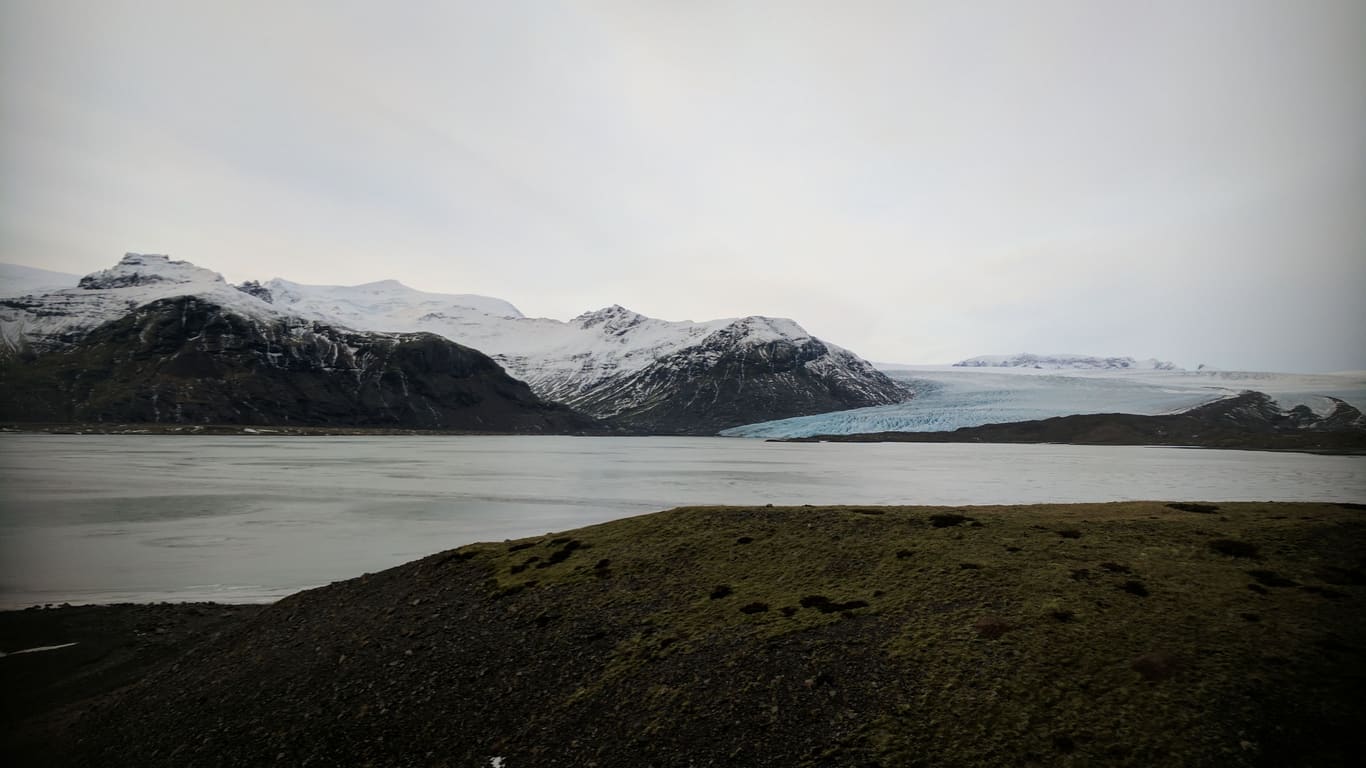
· photography · 11 min read
What's the Best Light for Ice Cave Photography in Iceland?
January–February is the prime window for blue ice, and overcast days beat sunshine inside the cave. An honest month-by-month guide to ice cave light.
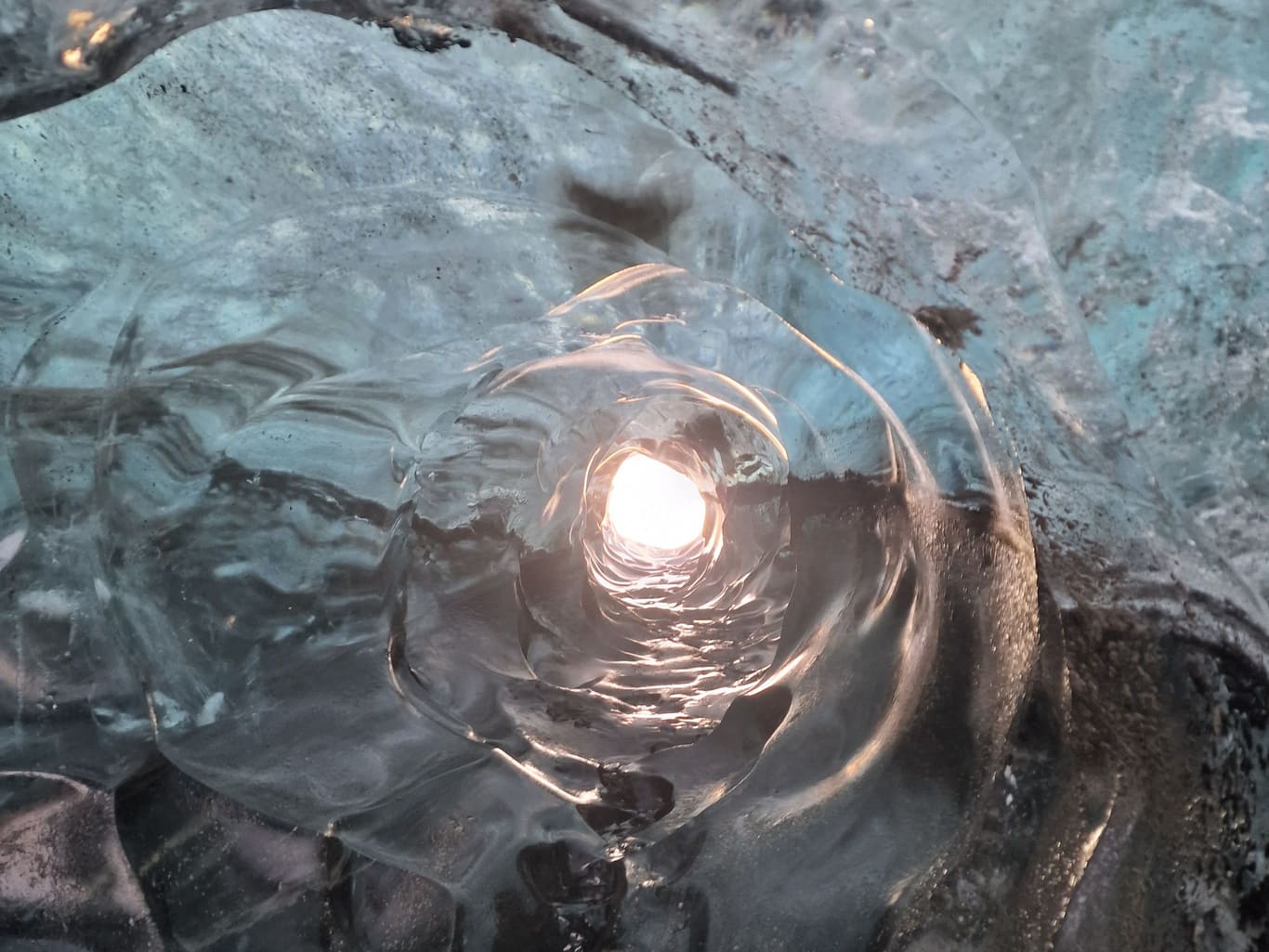
The best light for ice cave photography in Iceland comes in January and February, when the ice is at its deepest blue — and, counterintuitively, on overcast days, when flat grey daylight filters through the cave roof as an even, saturated blue while hard sunshine blows out the entrance and spots the interior. October caves are real and worth shooting, but the glacier is still between its summer and winter condition and the ice is less blue; from December the colour deepens. March and April repay photographers with fast-returning daylight and low sun raking the glacier outside, though the caves thin toward late April. Written by Sindri, who has guided ice cave tours on Vatnajökull since 2015.
I'm Sindri. My wife Fanney and I run Glacier Trips, a small family company in Höfn in South-East Iceland, and I've spent every winter since 2015 driving guests from Jökulsárlón into the caves of Vatnajökull. I'm also the photographer behind most of the photos on this site, so light is the part of this job I watch closest. The camera side — the settings I use inside the caves — has its own article; this one is about the light those settings are trying to catch.
What makes the light inside an ice cave good?
One principle explains everything else: an ice cave has no light of its own. Everything you photograph by has either come in through the entrance or filtered down through the roof. Entrance light is ordinary daylight — bright, directional, brutal on your histogram a few steps in. Roof light has passed through metres of dense glacier ice, which swallows the reds and passes the blues. That filtered glow is the colour people cross the world for.
So the quality of the light inside is set by two things you can't see from in there: what the sky is doing, and how thick and clean the ice overhead is. A thick, bare roof under a bright sky glows deep blue; a thin roof passes paler, whiter light — and when a cave is mostly openings, ice cave, ice arch and the other glacier terms sorts the vocabulary out. Where the colour comes from is in how ice caves form; what one winter does to a cave and its light is in what happens to an ice cave across one winter.
Which months have the best light for blue ice?
The ice follows a seasonal arc and the light follows the ice. In October the glacier is still between its summer and winter condition, so the caves are real but the blue is muted (a true ice cave versus a seasonal cave is that distinction). From December the blue deepens, January and February are the prime window, and in March and April daylight returns fast while the caves thin toward late April. Laid out honestly:
| Months | Ice colour | Light character | The honest trade-off |
|---|---|---|---|
| October–November | Less blue — the glacier is between its summer and winter condition | Soft, wet-weather light; rain-washed ice can glow surprisingly well | October is the wettest month of the season |
| December | The blue deepening | The sun stays low all day — long golden light on the glacier outside | Mid-winter weather; some mornings the answer is no |
| January–February | The prime window — deepest blue | Low raking sun outside; the most saturated interior glow under cloud | Winter storms — build a spare day into the plan |
| March–April | Still strong early; caves thin toward late April | Daylight returns fast, and April is the driest month | Late April is the season's end, not its peak |
The table describes odds, not promises — a given cave on a given day can beat its month or let it down. And colour isn't the only trade: the best month to visit an ice cave weighs it against roads and crowds, the 2026–27 season preview has this winter's early picture, and why tours don't run year-round explains the October-to-April frame. The wider map is our guide to ice caves in Iceland.
What weather is best for ice cave photos?
Overcast. Not the forecast anyone hopes for, but inside the cave, thick cloud is your friend: the roof only cares that the light is even. Under a grey sheet of cloud the whole roof glows uniformly and the blue comes through saturated and calm. Under hard sun, the entrance becomes a furnace of contrast, hot patches bloom wherever the ice runs thin, and the blue around them reads darker than it is.

The other two weathers that matter happen on top of the cave. Fresh snow on the roof dims the glow — the curtain again — and a cave that glowed last week can sit noticeably darker after a snowfall. Rain does the opposite: it washes the surface clean and the glow deepens. That's the quiet consolation of October, our wettest month, and why I never call a grey forecast a bad one.
What weather really decides is whether the day runs at all — wind and wet matter far more than temperature — the cave sits around 0 °C and mid-winter days outside are usually −2 to +4 °C, but a gale is a gale. Cave conditions are checked every morning — together with the other local operators and Vatnajökull National Park — before any group goes in; how we decide which ice cave to visit each day shows that call from the inside, and our safety page covers the rest.
Does the time of day matter for ice cave photos?
Less than photographers expect, and I'd rather tell you that than sell a myth. In mid-winter the sun in South-East Iceland sits low all day, so golden, raking light is more or less the standing condition outside. Inside the cave the clock matters even less: the glow is driven by cloud cover and roof thickness, not the hour, and a flat noon under cloud will out-glow a clear golden evening.
The honest version of the question is this: you photograph in the light the day gives you, and the skill is using it. A grey day is a roof-glow day. A hard-sun day is an entrance day — silhouettes and backlit ice at the mouth. A snowed-over day is a detail day: headlamp side-light and close texture work. Our guides stand in these caves all winter; say early that the photos matter and they'll point you at what the day does well.
How does the light play on our two tours?
The short Ice Cave Inside Vatnajökull tour is the cave-light tour: 2.5–3 hours built around roughly 30–45 minutes inside — enough for the roof-glow work if your settings are dialled in walking in. How long you spend inside an ice cave explains what moves those minutes.
Ice Cave Adventures Dream adds the other half of this article: a guided glacier hike on the surface of Vatnajökull, where the low raking winter sun actually reaches you. About 45–60 minutes inside the cave, plus hours outside among ridges and blue ice walls lit from the side. With eight guests at most, it's also the tour where a tripod earns its carry; which of our tours suits camera work makes the full comparison.

What settings catch the light once you're in it?
The short version, so your cave minutes go into frames: shoot RAW at f/5.6–f/8 with white balance set manually to 4500–5000 K, because auto white balance corrects the blue away. On a tripod, ISO 200–400 with shutters from 1/4 s to 2 s pulls out the deepest colour; handheld, raise the ISO and keep the shutter at 1/60 s or faster. The full walkthrough is in the camera settings guide, bringing a tripod into an ice cave covers the long-exposure question, and gloves you can shoot in are in what to wear.
Booking a guided ice cave tour
Both tours meet at the main parking area by Jökulsárlón Glacier Lagoon, where a parking fee applies. We don't do pickups, so nearly everyone drives.
- Ice Cave Inside Vatnajökull — 2.5–3 hours, maximum 14 guests, minimum age 8, 23,900 ISK. Includes a local guide, Super Jeep transport from Jökulsárlón to the glacier and back, micro spikes when needed, helmet, and headlamps if needed. Arrive 20 minutes before departure.
- Ice Cave Adventures Dream — 5–6 hours, maximum 8 guests, minimum age 14, 36,900 ISK. Adds a guided glacier hike, crampons, a harness when the route needs one, and an ice axe when needed. Arrive 30 minutes before departure.
The minimum ages are set by the safety plan we make for each tour, and the season runs October to April. Cancellation is free up to 48 hours before departure with a full refund; inside 48 hours there's no refund; and if we're the ones who cancel for weather or safety, you choose between a full refund and a free reschedule. The base price is the same with us as on the booking platforms, so use DIRECT5 for 5% off when you book direct. Practicalities live in the tour FAQ and what an ice cave tour costs; anything light-specific goes to info@glaciertrips.is or +354 779 2919 — the photography questions usually end up with me. We hold 4.9 stars across 580+ TripAdvisor reviews.
Frequently asked questions about ice cave light in Iceland
What is the best month for ice cave photography in Iceland?
January and February: the ice is at its deepest blue and the low winter sun gives long raking light outside. From December the blue is deepening; October is less blue, and by late April the caves are thinning.
Is sunny or cloudy weather better for ice cave photos?
Cloudy, counterintuitively. Overcast daylight filters through the cave roof as an even, saturated blue glow, while hard sun blows out the entrance and scatters hot spots where the ice runs thin. Save the clear days for the glacier surface.
What time of day is best for ice cave photography?
Inside the cave the clock matters little — the glow is driven by cloud cover and roof thickness. Outside, the mid-winter sun stays low all day, so raking light isn't confined to a golden hour. You photograph in the light the day gives you.
Is October good for ice cave photography?
The caves are worth photographing from the October opening, but early-season ice is generally less blue, and October is the wettest month. The consolation: rain-washed ice glows deeper, and grey skies suit the cave anyway.
Can you photograph the northern lights on an ice cave tour?
No. Ice cave tours run in daylight and the aurora needs a dark sky — that's an evening project from somewhere dark near Jökulsárlón, on your own. Nobody can promise them; it's weather.
— Sindri
Glacier Trips · Höfn, Iceland · A local family company since 2015