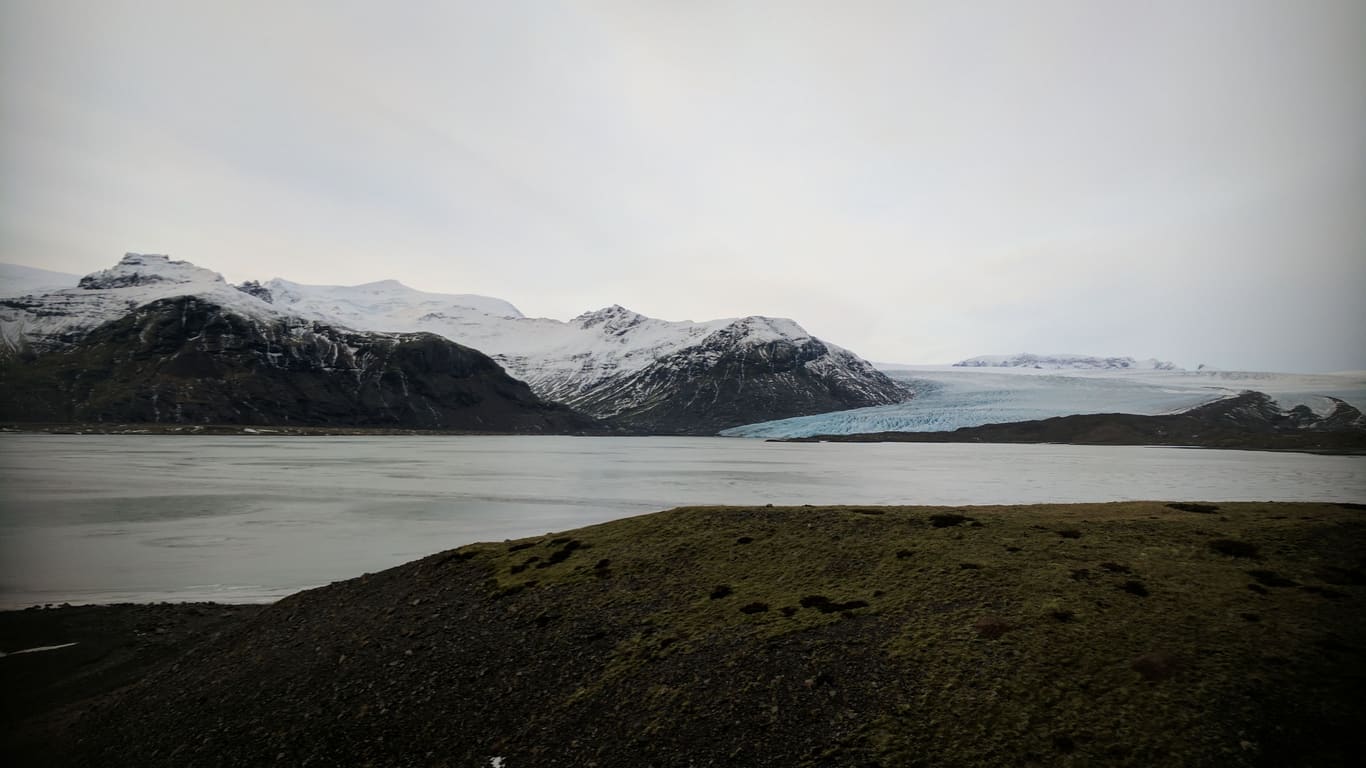
· planning · 11 min read
Do Ice Cave Tours Run Year-Round in Iceland? A Straight Answer From a Winter-Only Operator
Natural blue ice caves in Vatnajökull run October–April only. Year-round offers exist — the ash-banded Katla cave and a man-made tunnel — but they differ.
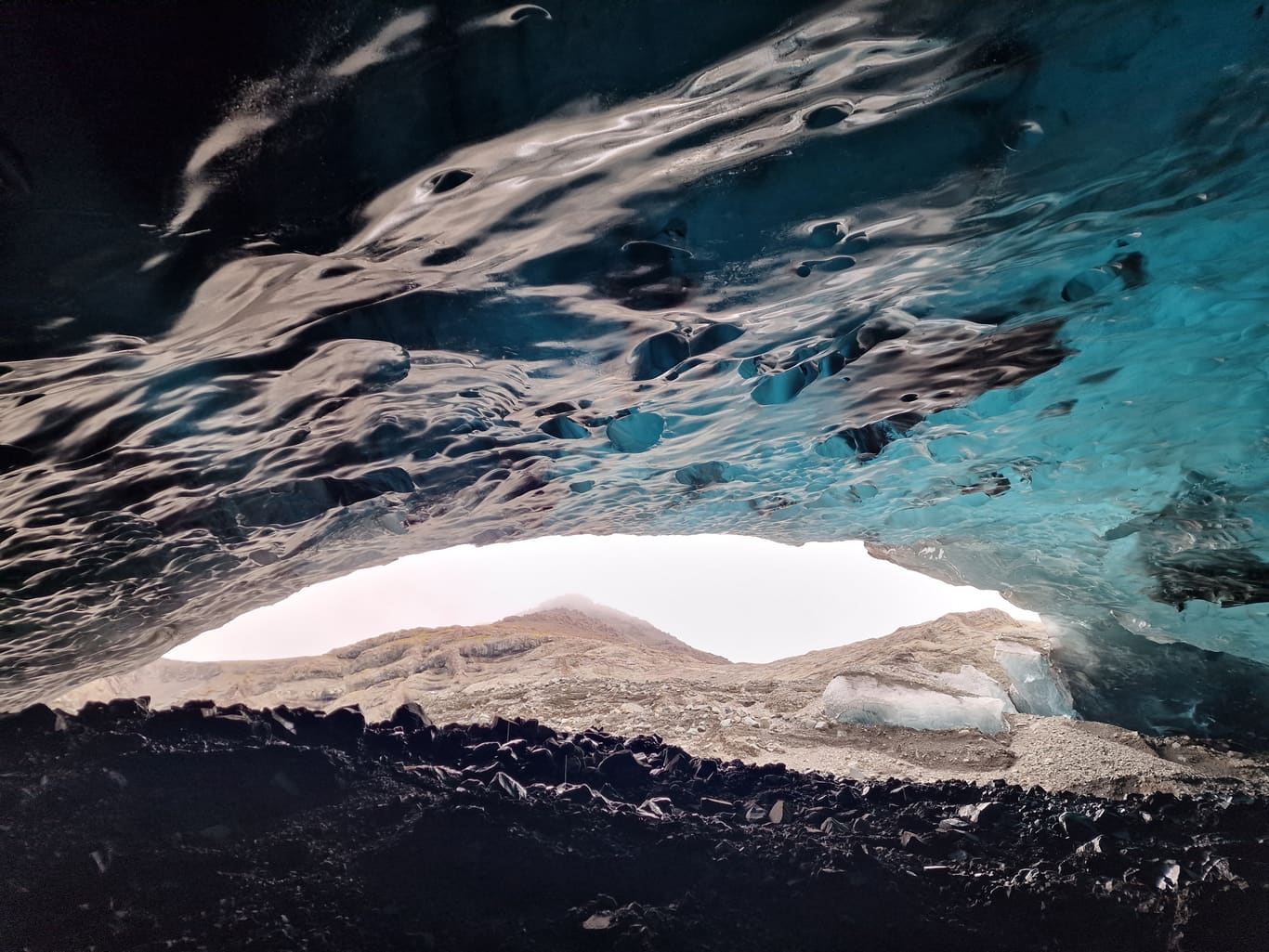
Ice cave tours do not run year-round in Iceland — not the natural blue ones. The blue ice caves in Vatnajökull form in winter and melt every summer, so tours inside them run from roughly October to April and stop entirely from May to September. The year-round ice cave offers you will see advertised are real, but they are different products: the ash-banded Katla cave near Vík and a man-made ice tunnel in Langjökull. Written by Sindri, who runs winter-only ice cave tours from Jökulsárlón.
I'm Sindri. My wife Fanney and I run Glacier Trips, a small family company in Höfn in South-East Iceland, and we've guided ice cave tours from Jökulsárlón since 2015. Every spring we close and every October we open again — not because demand disappears, but because the caves do. The glacier sets our calendar, not us. Emails asking whether we can make a summer exception arrive every week, so this article is the long version of the answer we send back.
What ice cave tours run when in Iceland?
Three different things get sold under the name "ice cave tour" in Iceland, and they run on three different calendars:
| Experience | When it runs | What it is |
|---|---|---|
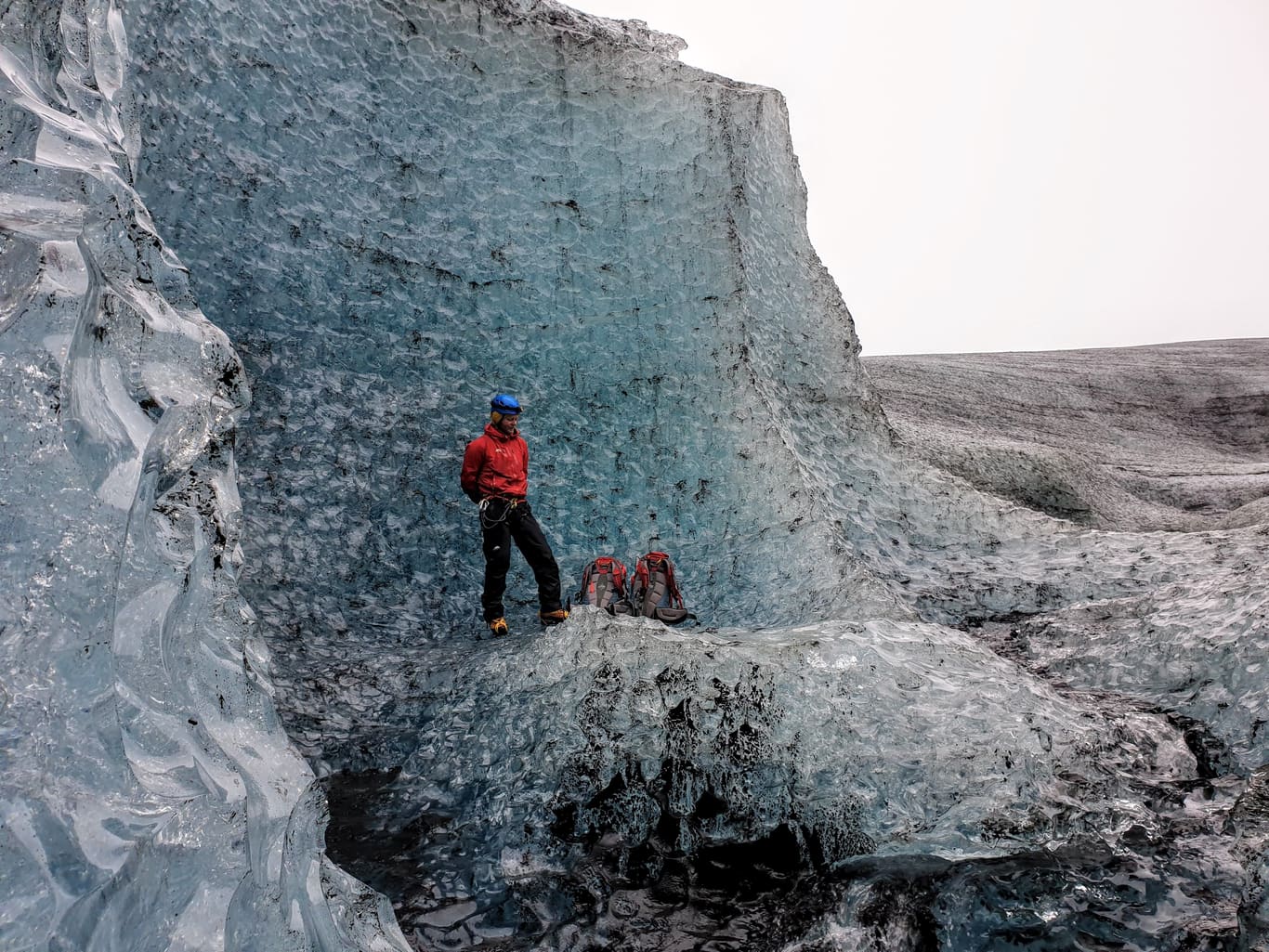
| Natural blue ice caves, Vatnajökull | October–April only | Naturally formed caves that melt each summer and re-form each winter, reached from Jökulsárlón. This is the deep-blue cave from the photos. |
| Katla ice cave, near Vík | Marketed as year-round | A natural cave in Kötlujökull with darker, ash-banded ice; operators stabilise access so it survives the summer melt. |
| Man-made ice tunnel, Langjökull | Year-round | A constructed attraction machine-cut into the glacier in west Iceland. Impressive engineering, not a natural cave. |
So when a listing says "ice caves all year", it isn't lying — it's describing one of the second two products. If the saturated blue cave is what you're coming for, it exists only in winter, and no operator anywhere can change that.
Why are the natural blue ice caves winter-only?
Because the same water that makes them unmakes them. Through the summer, meltwater rivers run under and through Vatnajökull's outlet glaciers, carving tunnels and chambers into the ice. While that carving is happening the caves are full of moving water, the ceilings are thinning from above, and a warm afternoon or a burst of rain can flood a passage quickly. Nobody guides tours into a Vatnajökull blue cave in summer — the caves are still being made.
Then autumn arrives. The cold slows the melt, the water drains, and the glacier firms up. What the summer carved becomes stable enough to walk into, and that's when our season begins. By late spring the cycle turns over again: the melt accelerates, the caves weaken, and we close. Each winter's caves are new — the cave in last February's photos is gone, and something different has formed nearby.
That yearly reset is also why the season has soft edges. In season we make a daily go/no-go call based on weather, roads and glacier conditions, and if we cancel a tour for safety you get a full refund or a new date. Our guide to ice caves in Iceland covers the formation story in more depth.
What are the year-round ice cave tours, then?
Two products, both real, both honest when they're described honestly.
The Katla ice cave near Vík
The Katla cave is in Kötlujökull, an outlet glacier of Mýrdalsjökull, with the volcano Katla underneath. Centuries of eruptions have folded ash into the moving ice, so the cave walls are striped black, grey and white with blue showing through in patches — more charcoal than sapphire. Tours leave from Vík, about 2.5 hours from Reykjavík, many with Reykjavík pickup, and the cave is promoted as a year-round destination: operators stabilise sections of it so access survives the summer melt.
When summer travellers email us about ice caves, Katla is usually the answer we give. It's a different look and a different experience from the blue Vatnajökull caves — we compared the two properly in Vatnajökull vs Katla if you're weighing them.
The man-made ice tunnel in Langjökull
Langjökull, in west Iceland, has a tunnel network cut into the glacier with machinery — a constructed attraction rather than a cave. Because engineering keeps it open, it runs in every month of the year, including high summer. The walls are smooth and machined rather than water-carved, and the colour is more muted than in a natural blue cave. It's a real way to stand inside a glacier in July. It just isn't the thing in the winter photos.
When exactly does the Vatnajökull season start and end?
Both of our tours run October to April. Within that window, conditions write the fine print: the first stable caves are usually ready at some point in October (a warm autumn pushes that later), and the season ends in April as the spring melt takes over — the exact last week varies from year to year. If your dates are flexible and you want to optimise for colour, crowds or northern lights, our best month to visit guide breaks the winter down month by month.
Visiting Iceland in summer — what are your options?
The straight version first: we run nothing ourselves from May to September — our tours exist October to April because that's when the caves exist. What our corner of Iceland does offer in summer — glacier-lagoon boat trips, sightseeing flights and glacier walks run by local partners we know — is collected on our local tours page. If your trip lands in summer, this is what we'd tell you by email:
- The Katla cave near Vík — the standard summer ice cave answer, about 2.5 hours from Reykjavík, ash-banded rather than blue.
- The Langjökull ice tunnel — man-made and open all year, in west Iceland.
- A glacier surface walk — several outlet glaciers on the south coast have guided summer walks on top of the ice. No caves, but crevasses and blue ice in daylight.
- A winter return built around the cave — if the blue cave is the point of the trip, this is the honest recommendation. Book the cave first and shape the itinerary around it. Jökulsárlón is about 5 hours from Reykjavík; our drive guide covers the road, and Reykjavík vs Jökulsárlón helps you decide where to base yourself.
Booking a winter tour (October–April)
If your dates land inside the season, the real thing is available, and this is what we run:
- Ice Cave Inside Vatnajökull — 2.5–3 hours, max 14 guests, 23,900 ISK. Super Jeep from Jökulsárlón, with helmet, micro spikes when needed and a headlamp provided.
- Ice Cave Adventures Dream — 5–6 hours, max 8 guests, 36,900 ISK. Adds a proper glacier hike, with crampons, harness and ice axe provided when the route calls for them.
Both tours meet at the main parking area by Jökulsárlón Glacier Lagoon — the national park's lot, where a parking fee applies. We don't do pickups, and the scheduled south-coast buses run mainly in summer and thin out in winter, so nearly everyone drives. The meeting point is mapped on our location page.
Every booking has free cancellation up to 48 hours before departure, and the code DIRECT5 takes 5% off when you book direct. Two useful reads before you come: what to wear (boots matter most) and what's included in the package. Still weighing the whole idea? We wrote honest answers on what the tours cost and whether they're worth it.

Frequently asked questions about ice cave season in Iceland
Do any ice cave tours run in summer in Iceland?
Yes, but not the natural blue Vatnajökull caves — those exist October to April only. The summer options are the Katla ice cave near Vík, which has darker ash-banded ice and stabilised access, and the man-made ice tunnel in Langjökull.
When do natural ice cave tours start each year?
In October. Autumn cold slows the melt and firms up the caves the summer carved, and the first departures run once conditions are stable. Our season at Vatnajökull opens in October every year and runs through April.
When do ice cave tours end in spring?
In April. The spring melt accelerates through the month and the caves weaken, so the season ends when conditions become unreliable — the exact last week differs from year to year. By May the natural blue Vatnajökull caves are gone until the autumn cold returns.
Are year-round ice cave tours a scam or real?
Real. The Katla cave near Vík and the Langjökull ice tunnel operate outside winter — one with stabilised access, one man-made. Just know what you're booking: neither is the deep-blue natural Vatnajökull cave from the photos, which is winter-only.
Is the Katla ice cave the same as the blue Vatnajökull caves?
No. Katla's cave, in Kötlujökull near Vík, has darker ice banded with volcanic ash, sits about 2.5 hours from Reykjavík and is marketed year-round. The saturated blue caves are in Vatnajökull, reached from Jökulsárlón, October to April only.
Can I do an ice cave tour in December?
Yes. December sits comfortably inside the October–April season, with long blue-hour light. It's also one of Iceland's busiest travel months, so book ahead — our groups are capped at 14 and 8 guests.
What happens if weather cancels my winter ice cave tour?
We make a daily go/no-go call on weather, roads and glacier conditions. If we cancel for safety, you choose a full refund or a new date. Separately, every booking has free cancellation up to 48 hours before departure.
If your dates are still moving, the short version to remember: winter gives you the blue caves, summer gives you Katla or the tunnel, and we'll be at the Jökulsárlón parking lot from October to April. Not sure which side of the calendar your trip lands on? Email info@glaciertrips.is or call +354 779 2919 and you'll get a straight answer — even when it's "come back in winter".
— Sindri
Glacier Trips · Höfn, Iceland · A local family company since 2015