· planning · 11 min read
Jökulsárlón Glacier Lagoon in Winter: What It's Really Like
Quieter, darker, full of ice: the lagoon and Diamond Beach are free all winter, the boats are paused, the ice caves are running. An honest local guide.
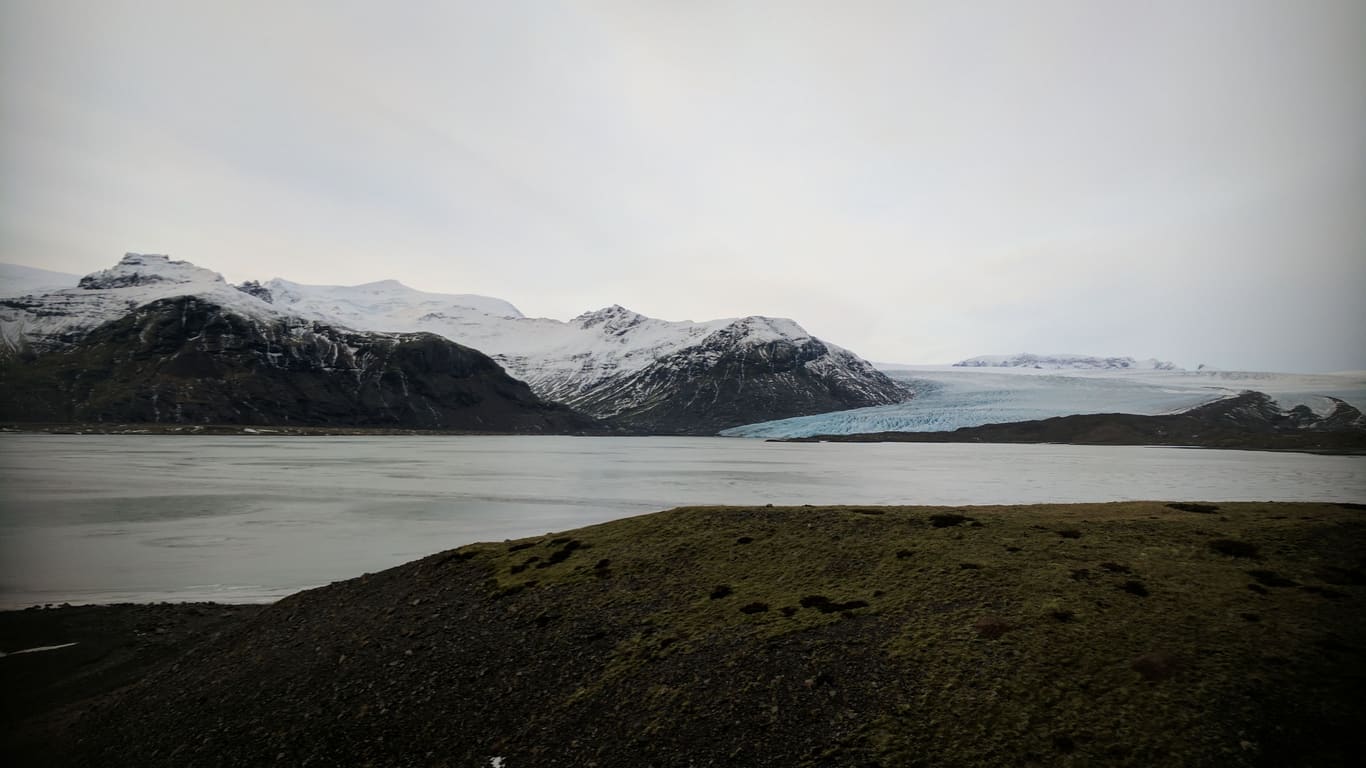
Jökulsárlón in winter is the quiet version of a famous place — I'd argue the better one. The lagoon stays full of icebergs, the light stays low and good most of the day, and everything along the shore is open and free: the lagoon edge, Diamond Beach across the road, the Ring Road viewpoints — no ticket, no guide, just the parking fee. The boats are paused until the warmer months; the natural ice caves inside Vatnajökull are running — the winter headline act. On a clear night, the dark sky over the lagoon is good aurora country. Written by Sindri, who has guided ice cave tours on Vatnajökull since 2015.
I'm Sindri. My wife Fanney and I run Glacier Trips, a small family company in Höfn in South-East Iceland, and our tours meet at the main parking area by Jökulsárlón — I've crossed that car park most winter mornings since 2015. The same question turns up every season, in our inbox and on travel forums: is Jökulsárlón worth a winter itinerary day, and what can you actually do there once the boats stop? Here's the local answer, including the parts that earn us nothing.
What is Jökulsárlón like in winter?
Emptier, darker and — to my eye — at its best. Jökulsárlón is a deep meltwater lagoon between Breiðamerkurjökull and the sea, full of bergs calved off the glacier and drifting toward the sea. The lagoon carries ice all year; in cold still spells a thin grey skin knits the open water between the bergs and everything goes quiet.
The big changes are the light and the crowd. The summer coach traffic thins out, and the winter sun slides along the horizon rather than over it, stretching the low light photographers chase across the day. Seals work the lagoon and the river mouth — often, not always, so treat them as a bonus, not the plan. Some days are grey, horizontal sleet and glimpses of ice. That's real winter too.

What's free and open all winter?
The honest headline: the best of Jökulsárlón costs nothing beyond the parking fee. The lagoon shore is public shoreline, walked at your own pace, and Diamond Beach sits across Route 1 — the black-sand beach where the bergs wash back up, polished clear by the surf and restocked by the tides all winter. Give the waves a wide margin — this is open North Atlantic surf.
Add the marked Ring Road viewpoints — glacier tongues from solid ground — and it's a full stop with no ticket. Where the free ground ends — at the glacier ice itself — is drawn in what you can and can't do without a guide; the location page maps the car parks.

What's paused for the winter?
The boats. The lagoon boat trips run through the warmer months and wind down in autumn; mid-winter is their quiet season, and exact dates are theirs to publish. If you pictured a winter cruise among the bergs, let that one go — in winter the lagoon is a shore experience. The boat tour or the ice cave tour lays the two seasons side by side.
The timing isn't a coincidence: the summer melt that fills the lagoon also carves the channels through the glacier that become caves, so one winds down as the other firms up. Our season opened on 1 October.
What's running: the ice caves
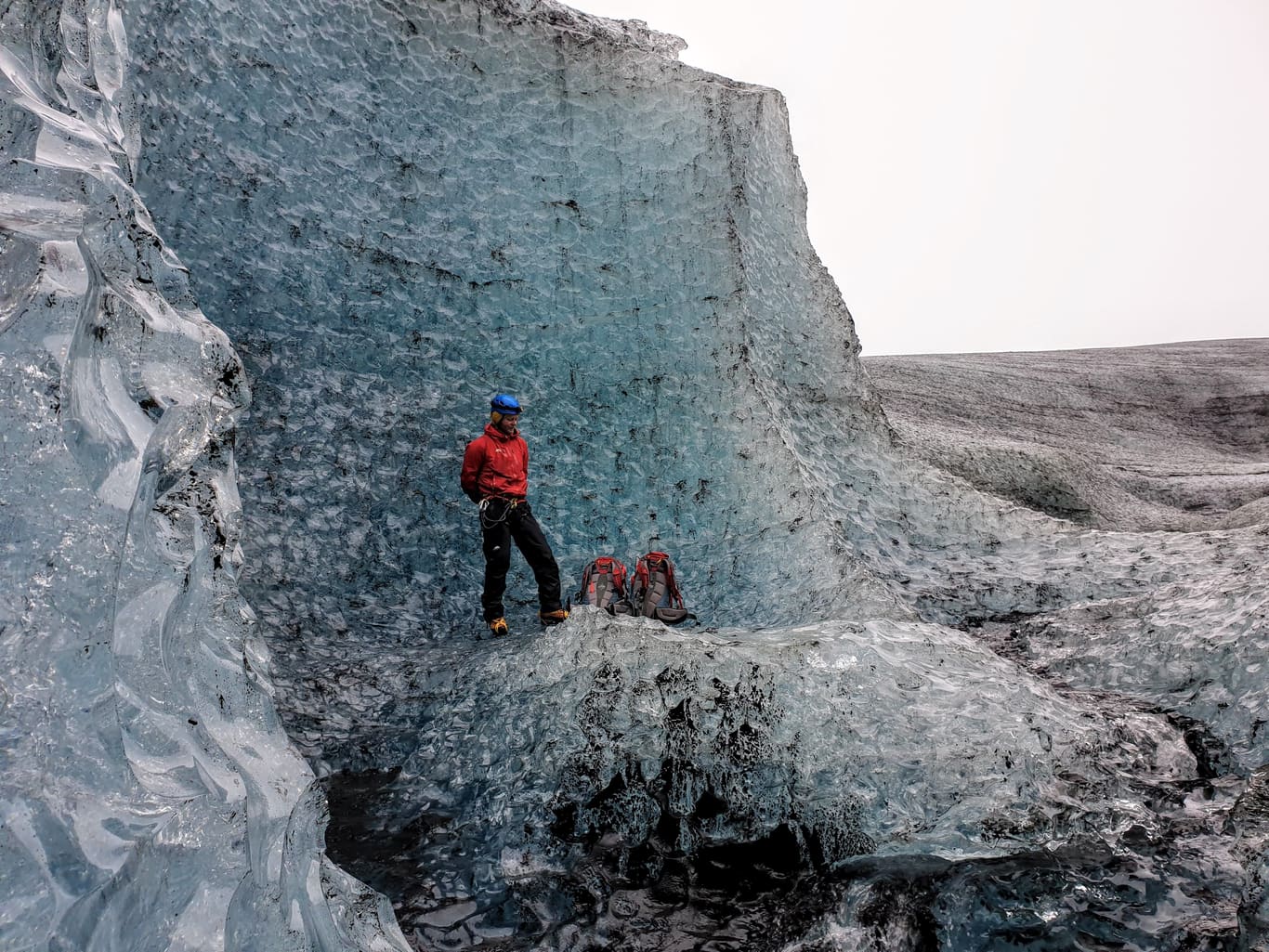
The headline act moves inside the glacier. The natural blue ice caves of Vatnajökull are only firm enough to enter from roughly October to April — our 2026–27 season runs from 1 October 2026 to April 2027 — and the tours leave from the parking area where you've been watching the bergs. How ice caves form explains why there's no summer version, and the guide to ice caves in Iceland is the wider map.
We run two tours, both by Super Jeep on 37–44 inch tyres. The short Ice Cave Inside Vatnajökull tour is 2.5–3 hours with roughly 30–45 minutes inside the cave, maximum 14 guests, minimum age 8, at 23,900 ISK. Ice Cave Adventures Dream is 5–6 hours with roughly 45–60 minutes inside plus a guided glacier hike, maximum 8, minimum age 14, at 36,900 ISK. Glacier hike or ice cave tour compares the formats.
Two truths first. Early-season ice is usually less blue; the deep colour builds from December and peaks in January and February — why glacier ice is blue explains what you're looking at. And no cave is promised: cave conditions are checked every morning — together with the other local operators and Vatnajökull National Park — before any group goes in. Some mornings the answer is no.
Can you see the northern lights at Jökulsárlón?
Sometimes — and over the lagoon it's as good as Iceland gets. The lagoon sits far from any town's lights, the winter sky is properly dark, and bergs under an active aurora is the photograph many winter guests quietly hope for. The honest frame: they're a night-time, clear-sky, solar-activity event — two of those three out of everyone's hands, and cloud is the usual villain on this coast.
The number of aurora tours we sell is zero — I'm not charging you for weather. Staying a night nearby, you step outside, look north across the lagoon, and either it's happening or it isn't. Our cave tours run in daylight, so the two stack in one itinerary without competing.
The practical winter day at Jökulsárlón
Winter here is milder than people picture and rougher than the thermometer admits. Mid-winter days at the lagoon mostly sit around −2 to +4 °C; most winters throw in a spell near −10, and −15 is rare. The number isn't what gets to you — wind and wet are, and the shore is exposed to both. Dress as for the cave tour and you'll be comfortable.
Daylight is the real planning constraint, and the hours shift week by week. The mid-winter sun stays low all day, dawn and dusk stretch long, and the usable light is a window you build the day inside — and it's nearly all golden hour.
Getting here deserves respect. Jökulsárlón is a long way down the South Coast from Reykjavík, winter can close the road, and the sensible version is an overnight nearby — the drive guide covers the route and the morning checks, with a without-a-rental-car version too. Book the cave 2–3 weeks out and you cover most of the winter; Christmas and New Year sell out first, and the median guest in 2025–26 booked 11 days ahead — how far ahead to book has the detail, the cancellation policy what happens when weather wins.
The winter scoreboard:
| At the lagoon | Open in winter? | Cost | Notes |
|---|---|---|---|
| Lagoon shore | Yes, year-round | Free (parking fee) | Bergs all winter; seals often, not always |
| Diamond Beach | Yes, year-round | Free (parking fee) | Across Route 1; respect the surf |
| Ring Road viewpoints | Yes, year-round | Free | Glacier tongues from solid ground |
| Lagoon boat trips | No — paused | — | Warmer months; wind down in autumn |
| Ice cave tours | Yes — 1 Oct to April | From 23,900 ISK | Main parking; Super Jeep to the glacier |
| Northern lights | Night only, sky permitting | Free | No tour needed; cloud decides |
Is Jökulsárlón worth visiting in winter?
Yes — in my biased-but-informed view, more than in summer, because the combination is complete in winter: the lagoon at its quietest, the beach at its sharpest, both free, plus the one thing summer cannot offer at any price — a natural ice cave. The short tour takes 2.5–3 hours, leaving time either side for shore and beach — all of it from one car park.
The honest caveat is the weather's veto: a winter day here can be rearranged by wind or a closed road, so give Jökulsárlón a full day, not a drive-through hour, and put the cave early in the itinerary, not the last morning. Still weighing the cave itself? Is an ice cave tour worth it answers that with the sales talk removed, and the best-month guide compares the winter months honestly.
Booking an ice cave tour
Both tours meet at the main parking area by Jökulsárlón Glacier Lagoon, where a parking fee applies. We don't do pickups, so nearly everyone drives.
- Ice Cave Inside Vatnajökull — 2.5–3 hours, maximum 14 guests, minimum age 8, 23,900 ISK. Includes a local guide, Super Jeep transport from Jökulsárlón to the glacier and back, micro spikes when needed, helmet, and headlamps if needed. Arrive 20 minutes before departure.
- Ice Cave Adventures Dream — 5–6 hours, maximum 8 guests, minimum age 14, 36,900 ISK. Adds a guided glacier hike, crampons, a harness when the route needs one, and an ice axe when needed. Arrive 30 minutes before departure.
The minimum ages are set by the safety plan we make for each tour. Cancellation is free up to 48 hours before departure with a full refund; inside 48 hours there's no refund; and if we cancel for weather or safety, you choose between a full refund and a free reschedule. The base price is the same with us or on a booking platform, so use DIRECT5 for 5% off when you book direct. Most other questions live in the tour FAQ and on our safety page; the rest goes to info@glaciertrips.is or +354 779 2919. We hold 4.9 stars across 580+ TripAdvisor reviews — much of it from being straight about winter conditions.
Frequently asked questions about Jökulsárlón in winter
Is Jökulsárlón worth visiting in winter?
Yes. The lagoon is full of icebergs all winter, the shore and Diamond Beach are free and open, the light stays low and photogenic, and the natural ice caves inside Vatnajökull — closed all summer — are running.
Can you see the northern lights at Jökulsárlón?
On clear, active nights, yes — the sky is properly dark and you look north straight across the lagoon. Nobody can promise them: cloud and solar activity decide. No tour needed — step outside and check.
Are the boat tours running in winter?
No — the lagoon boat trips belong to the warmer months and wind down in autumn; exact dates are the operators' to publish. In winter the lagoon is a shore experience; the ice cave tours are the trip that's running.
Is Diamond Beach free?
Yes — a public black-sand beach across Route 1 from the lagoon, open year-round with no ticket or guide; a parking fee applies at the lots. The ice is restocked by the tides all winter; keep a healthy distance from the surf.
How cold is Jökulsárlón in winter?
Milder than most expect: mid-winter days mostly sit around −2 to +4 °C, most winters bring a spell near −10, and −15 is rare. Wind and wet matter more than the number — waterproof layers and sturdy boots beat a heavier coat.
— Sindri
Glacier Trips · Höfn, Iceland · A local family company since 2015