· planning · 12 min read
What Happens to an Ice Cave Across One Winter? From First Freeze to Final Melt
An ice cave in Vatnajökull lives one winter. How a cave firms up in October, hits its deepest blue in mid-winter, ages through April and melts in May.
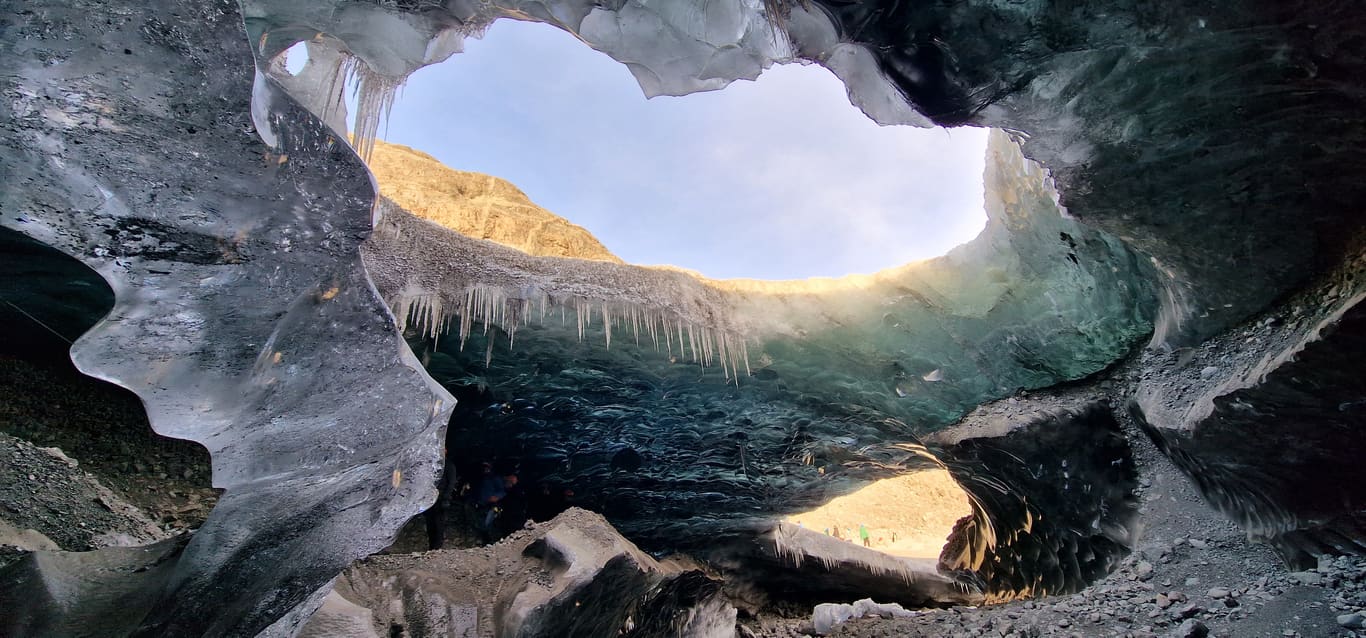
An ice cave in Vatnajökull typically lasts one winter. The summer meltwater channel that shaped it drains and firms up in October, stabilises through November, holds its coldest and bluest form from December to February, ages through March and April, and is taken back by meltwater in May. The same cave photographed in October and again in February can look like two different places.
I'm Sindri. My wife Fanney and I run Glacier Trips from Höfn in South-East Iceland, and I've guided ice cave tours in Vatnajökull every winter since 2015. Guests ask about a cave's life in sideways forms all season: "will it still be there in March?", "why doesn't the cave match the photo I saw?". So here is the whole arc in one place — what one winter does to a cave, from the first hard frost to the morning it's gone.
Why does an ice cave only last one winter?
Because the cave is a drained riverbed. Summer meltwater carves channels through the glacier, and when autumn cold shuts the water off, the emptied channel becomes a space you can walk into. The water that made the cave comes back the next summer and unmakes it. The full mechanics are in our guide to how ice caves form; this article is about everything that happens between those two summers.
The life of a cave, month by month
Every cave is different and no two winters run identically, but we watch this cycle run every winter, and the arc barely changes:
| Phase | What the glacier is doing | What that means inside the cave |
|---|---|---|
| October | Autumn cold empties and firms up the summer meltwater channel | Young season ice, usually less deeply blue; smaller stable sections open first |
| November | The cold settles in for good | The cave stabilises and more of it becomes accessible |
| December–February | The coldest, most stable stretch of winter | The deepest blue of the year, and the heaviest demand |
| March | Still properly cold; daylight returning fast | The cave holds its winter form; the easiest travelling weeks |
| April | Melt accelerates | Floors wetter, surfaces softening; the cave ages visibly |
| May | Meltwater returns in force | The cave is gone |
The season runs October to April. The 2026–27 winter is open for booking and runs from 1 October, conditions permitting — dates and planning detail are in our season preview.
What is the cave like in October?
New. The channel that ran with water in September has drained, and the first hard frosts firm it up into something you can stand inside. October ice is real glacier ice — the walls themselves can be centuries old — but as a cave it is days or weeks old, and the colour is usually less deeply blue than it will be by mid-winter. The smaller, most stable sections open first, and the inventory grows through late October as more of the glacier firms up. What you get in exchange for the paler blue is the mildest weather of the season and proper daylight, around eleven hours at the start of the month. Our month-by-month guide weighs that trade honestly.
How does the cave change in November?
November is when the cave stops feeling provisional. The cold stops taking days off, the last of the moving water locks up, and sections that were borderline in October become straightforwardly accessible. Daylight keeps shrinking, from those eleven hours down towards five by the end of the month, and the low sun suits the ice: soft, cool light for most of the working day. By late November the cave is essentially in its winter form.
Why are December to February the cave's best months?
Because the cave is at its coldest and most stable, and the ice is at its deepest blue. Mid-winter is the stretch the famous photographs come from, and if I have to pick one month it's February — the same colour with daylight coming back, from roughly four hours around the winter solstice to close to ten by late February. On the glacier surface it's usually within a few degrees of freezing, with the cave itself sitting around 0°C, and that steady cold is exactly what keeps the ceiling honest.
It's also when demand is heaviest. Christmas and New Year dates are the first to sell out every winter, and mid-winter brings the season's most storms, which means the most weather cancellations too. If we cancel for safety you get a full refund or a free reschedule; the whole policy is in our bad-weather guide.
What happens to the cave in March and April?
March is still a strong month inside the ice. The cave holds its mid-winter form while everything around it gets easier: daylight grows from about ten hours towards thirteen, the weather settles, and the driving is the calmest of the winter. A lot of first-time winter visitors are happiest in March.
April is when the cave starts to show its age. Melt accelerates, floors get wetter, and surfaces that were crisp in February begin to soften. It is still a real ice cave — some winters we run well into April — but the season's final day is a conditions call, not a printed date. The later in April you book, the more that call matters.
When does the cave disappear?
In May, the meltwater that carved the cave takes it back. Water runs through the channel again, the structure thins, and by early summer the cave as a walkable space no longer exists. From May to September there are no natural ice caves at Vatnajökull — the summer offerings you'll see advertised are on other glaciers — the ash-banded Katla cave near Vík, where operators stabilise access, and a man-made tunnel in Langjökull, and the question of whether tours run year-round has a short answer: no. Next winter's cave may form in roughly the same place, or somewhere else entirely. The glacier decides.
Why does the same cave look so different in October and February?
Because the cave never stops changing. Through the winter, ceilings smooth out, entrances move, snow drifts in and out of the mouth, floors rise and fall, and the colour deepens as young season ice gives way to the polished blue of mid-winter. None of this is dramatic on any single day. Across three months it adds up completely. The cave you walk into in October and the cave you stand in come February are the same hole in the glacier, and they do not look like the same place.
This is also why nobody can honestly promise a specific cave months ahead, and why we never name one in advance. Conditions are assessed every morning in season, together with the other local operators and Vatnajökull National Park, and the day's plan follows the glacier rather than the brochure. After a decade of guiding, that morning routine is the part of the job I trust most.
How do you plan a trip around a cave's lifecycle?
Pick the phase that fits what you care about most — colour in mid-winter, daylight and easier roads at either end — then book once your dates are firm. Both of our tours run the whole season from the main parking area at Jökulsárlón glacier lagoon (it's the National Park lot, so a parking fee applies, and there are no pickups — the exact spot is on our location page):
- Ice Cave Inside Vatnajökull — 2.5–3 hours, max 14 guests, age 8+, 23,900 ISK.
- Adventures Dream — 5–6 hours, max 8 guests, age 14+, 36,900 ISK, adding a guided glacier hike.
Booking direct with the code DIRECT5 takes 5% off. Cancellation is free up to 48 hours before departure, and if weather forces us to downgrade the tour on the day, the price difference is refunded. Still weighing the whole idea? We wrote that up too.

Frequently asked questions
How long does an ice cave in Iceland last?
Usually one winter. A cave firms up out of a drained meltwater channel in October, is at its most stable from December to February, ages through April and melts away in May. Some caves re-form in roughly the same area the next winter, but never identically.
Is it the same cave all season?
Mostly, yes — but it changes continuously. Ceilings smooth out, entrances move, snow drifts in and out, and the colour deepens from October's paler ice to the deep blue of mid-winter. A cave in October and the same cave in February can look like two different places.
Can the same ice cave come back the next winter?
Sometimes a cave forms in roughly the same area for several winters, because meltwater tends to follow similar lines through the glacier. It is never the same cave twice, though — the shape, size and entrance are carved fresh by each summer's water.
When in its life is an ice cave at its best?
December to February, when the ice is coldest, most stable and at its deepest blue — February is our pick, because daylight is returning by then. October–November and March–April trade some colour for milder weather, easier driving and longer days.
Why is October ice less blue than February ice?
An October cave is freshly formed, and its ice usually has not reached its mid-winter colour yet. It is real glacier ice and worth the visit, but the deep saturated blue in the famous photographs belongs to December through February, once the cold has properly settled in.
What happens to ice caves in summer?
They melt. From May to September the meltwater that carved the caves runs through them again, and there are no natural ice caves to visit at Vatnajökull. Summer offerings elsewhere are the ash-banded Katla cave near Vík and the man-made Langjökull tunnel — a different experience on other glaciers.
Can an ice cave close in the middle of the season?
Yes. A warm spell, heavy rain or a structural change can close a cave at any point in the winter. Conditions are assessed every morning together with the other local operators and Vatnajökull National Park, and if we cancel for safety you get a full refund or a free reschedule.
Still unsure which end of the winter suits you? Email info@glaciertrips.is or call +354 779 2919 with your dates and we'll tell you where in its life the cave will be. For the wider background, start with our guide to ice caves in Iceland or the tour FAQ.
— Sindri
Glacier Trips · Höfn, Iceland · family-run since 2015