· planning · 11 min read
Is Vatnajökull the Only Place With Ice Caves in Iceland? A Local Guide Maps the Options
No — the Katla cave near Vík and a man-made tunnel in Langjökull exist too. But the deep-blue natural winter caves form in Vatnajökull, October to April.

No — Vatnajökull is not the only place with ice caves in Iceland, but it is where the natural blue winter caves are at their best and most numerous. The country has two real alternatives: the Katla ice cave near Vík, a natural cave with darker, ash-banded ice that is marketed year-round, and Langjökull, which has a man-made ice tunnel open in every month and, since late 2025, a natural cave visited in winter. Small caves also appear on other glaciers in some winters, with no established tour scene around them. Written by Sindri, who has guided ice cave tours on Vatnajökull since 2015.
I'm Sindri. My wife Fanney and I run Glacier Trips, a small family company in Höfn in South-East Iceland, and every winter since 2015 we've driven guests from Jökulsárlón into the caves of Vatnajökull. When people research an ice cave tour, almost every list points them our way, and a reasonable question follows: is that really the only place? It isn't, and knowing the alternatives will help you book the thing that actually fits your dates.
Where can you see ice caves in Iceland?
Three places offer an ice cave experience at tour scale, on three different glaciers. This is the whole map:
| Ice type | Season | Drive from Reykjavík | Best for | |
|---|---|---|---|---|
| Vatnajökull (from Jökulsárlón) | Natural caves of deep-blue winter ice | October–April | About 5 hours | Winter trips built around the blue cave; photography |
| Katla cave (Kötlujökull, near Vík) | Natural cave, darker ice banded with volcanic ash | Marketed year-round | About 2.5 hours | Summer visits; short Reykjavík-based trips |
| Langjökull (west Iceland) | Man-made machine-cut tunnel, plus a natural cave | Tunnel year-round; natural cave in winter | A couple of hours | Standing inside a glacier in any month; winter day trips from Reykjavík |
Iceland has more glaciers than these three, of course — Hofsjökull, Drangajökull and Snæfellsjökull among them — and in some winters a small cave forms on one or another. None of them supports an established ice cave tour scene: the caves are occasional, access is unpredictable, and there is no local operator base. The guided experiences live on the three glaciers in the table. I've explained separately why none of them can be visited unguided.
Why does Vatnajökull have most of Iceland's ice caves?
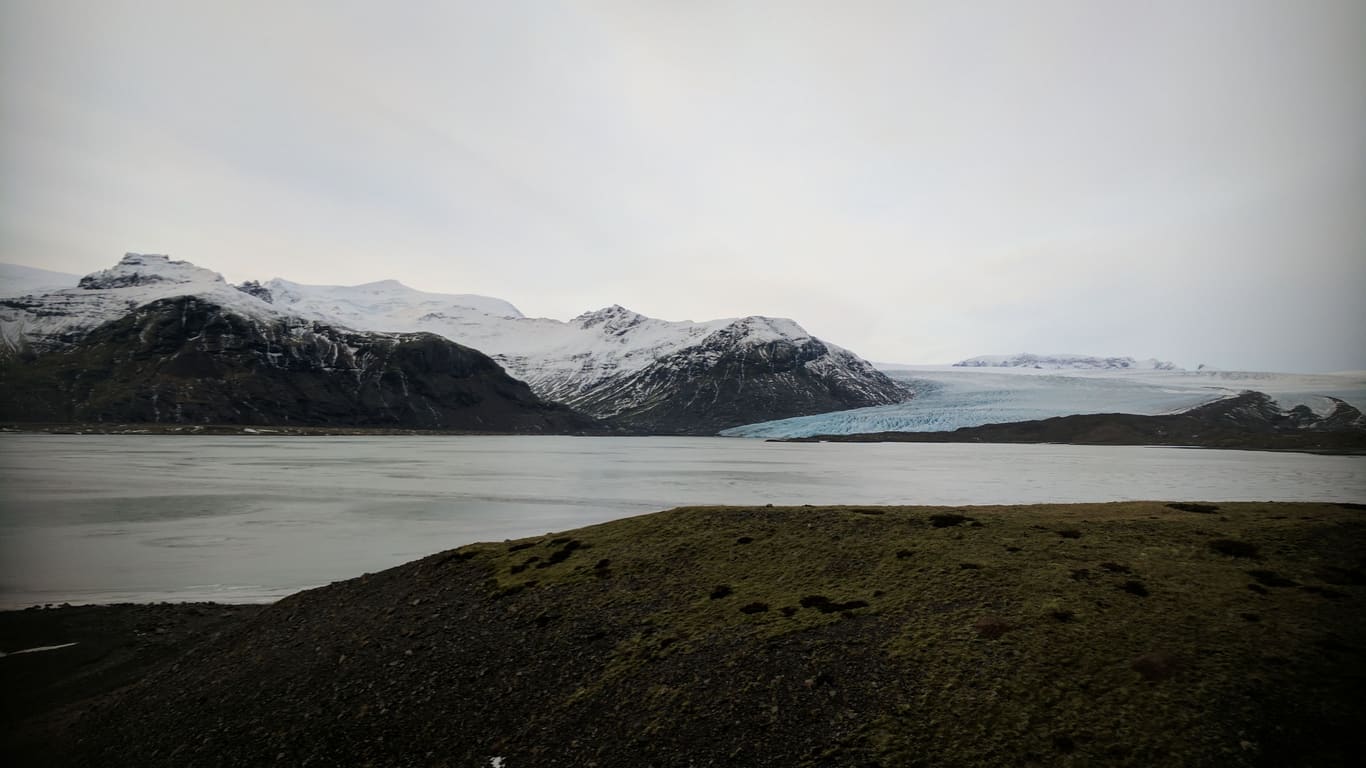
Size, mostly. Vatnajökull is by far the largest glacier in Europe, and it feeds dozens of outlet glaciers flowing down toward the coast. Every summer, meltwater carves channels through those outlets; every autumn, the cold firms the channels into caves you can walk into. More outlets mean more caves, so where a smaller glacier might manage one workable cave in a good year, Vatnajökull produces a fresh set every winter. Ours form in outlets such as Breiðamerkurjökull, which flows down toward Jökulsárlón glacier lagoon — the parking lot where the tours begin. The full formation story is in how ice caves form.
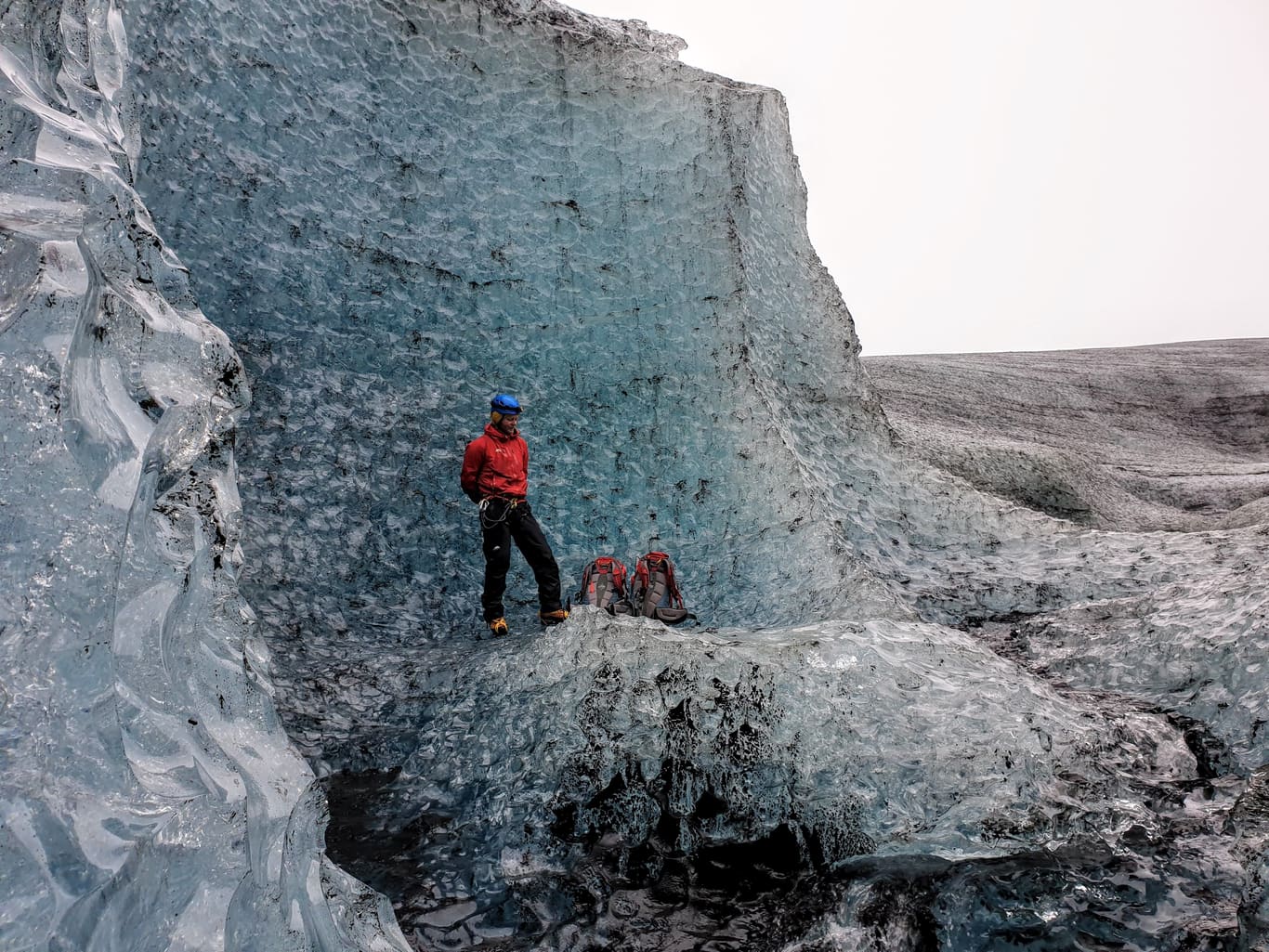
Then there's the ice itself. The blue in the postcards comes from old, dense glacier ice, which swallows the red end of the light and returns the blue, and the outlets around Jökulsárlón carry little volcanic ash, so the colour reads deep and clean rather than striped with grey. That look belongs to winter: the caves exist from roughly October to April and melt away every summer. Our guide to ice caves in Iceland covers what they're like to stand in.
People are the rest of it. Because the caves return reliably, Jökulsárlón grew the densest ice cave operator scene in Iceland — cave conditions are checked every morning in season, together with the other local operators and Vatnajökull National Park, and the day's safest cave is chosen before any group goes in. In eleven winters of guiding we have never needed to leave Vatnajökull to find a cave worth showing a guest. Our 2026–27 season runs from 1 October to April; the season preview follows how the autumn shapes up.
What is the Katla ice cave near Vík?
The Katla cave is a natural cave in Kötlujökull, an outlet of Mýrdalsjökull near Vík — the volcano Katla underneath is what gives the cave its name and its ash. Centuries of eruptions have folded dark layers into the moving ice, so the walls are striped black, grey and white, with blue showing through in patches. Tours leave from Vík, about 2.5 hours from Reykjavík, many with Reykjavík pickup, and the cave is marketed year-round: operators stabilise sections of it so access survives the summer melt.
It's a genuine glacier experience, and for two kinds of traveller it's the recommendation we ourselves give — people visiting in summer, when the Vatnajökull blue caves simply don't exist, and people based in Reykjavík with no time to come east. If you're weighing the two, we wrote a full head-to-head in Vatnajökull vs Katla, ash bands and all.
What is the Langjökull ice tunnel?
Langjökull, Iceland's second-largest glacier, sits in the west, a couple of hours from Reykjavík. It is best known for a man-made ice tunnel: a network of passages machine-cut into the glacier, open in every month of the year because engineering keeps it open. The walls are smooth rather than water-carved and the colour is more muted than in a natural blue cave. It's a real way to stand inside a glacier in July — just a constructed attraction rather than something the glacier made, which is worth knowing before you book. Since late 2025, Langjökull operators have also run winter tours to a natural ice cave on the glacier, including as a long day trip from Reykjavík. The seasonal logic behind all three options is laid out in do ice cave tours run year-round.
Which ice cave experience should you choose?
Let your dates decide first, then your base.
- October to April, and the deep-blue cave is the point of the trip: Vatnajökull. Jökulsárlón is about 5 hours from Reykjavík, so plan at least one night in the southeast — our drive guide covers the road, and best month to visit breaks the winter down if your dates are flexible.
- May to September: the blue caves don't exist then, and no operator can change that. Katla or the Langjökull tunnel are the real options.
- Based in Reykjavík with one spare day: Katla at 2.5 hours works as a day trip, the tunnel more easily still, and in winter the natural cave on Langjökull does too. Jökulsárlón genuinely doesn't.
- A winter week or longer: plenty of guests do Katla from the Reykjavík end and the blue caves out east, and tell us the contrast made each one better.
Visiting the Vatnajökull ice caves
If the blue winter caves are your pick, these are our two tours. Both meet at the main parking area by Jökulsárlón Glacier Lagoon — the national park's lot, where a parking fee applies — and we don't do pickups, so nearly everyone drives. The meeting point is mapped on our location page.
- Ice Cave Inside Vatnajökull — 2.5–3 hours, maximum 14 guests, minimum age 8, 23,900 ISK. Super Jeep from Jökulsárlón to the glacier and back.
- Ice Cave Adventures Dream — 5–6 hours, maximum 8 guests, minimum age 14, 36,900 ISK. Adds a proper glacier hike to the cave visit.
Every booking has free cancellation up to 48 hours before departure, and the code DIRECT5 takes 5% off when you book direct. Meeting times, weather calls and gear questions are answered in the tour FAQ, and if you're still weighing the whole idea, we wrote an honest answer to is an ice cave tour worth it. Not sure whether Vatnajökull, Katla or the tunnel fits your trip? Email info@glaciertrips.is or call +354 779 2919 and I'll tell you straight, even when the answer isn't us — that habit is a big part of how a small family company holds 4.9 stars across 580+ TripAdvisor reviews.

Frequently asked questions about ice cave locations in Iceland
Is Vatnajökull the only place to see ice caves in Iceland?
No. Iceland also has the Katla ice cave near Vík, a natural cave with darker ash-banded ice, and Langjökull, with a man-made ice tunnel and, since late 2025, a natural winter cave. Vatnajökull is where the natural deep-blue winter caves form in numbers, reached from Jökulsárlón between October and April.
Which ice cave is closest to Reykjavík?
Langjökull, a couple of hours away, with a man-made ice tunnel open all year and, since late 2025, a natural cave visited in winter. The natural Katla cave near Vík is about 2.5 hours. The blue Vatnajökull caves at Jökulsárlón are about 5 hours from Reykjavík, so they need an overnight stay rather than a day trip.
Are there ice caves in north Iceland?
Not at tour scale. Small caves can form on Iceland's other glaciers in some winters, but no established ice cave tour scene exists outside the south and west of the country. The guided options are Vatnajökull's blue caves, the Katla cave near Vík, and the tunnel and winter cave on Langjökull.
Why are the Vatnajökull ice caves so blue?
Old, dense glacier ice absorbs the red end of the light and reflects the blue back. Vatnajökull's outlet glaciers around Jökulsárlón carry little volcanic ash, so the colour stays deep and clean — unlike the Katla cave, where ash bands stripe the ice dark.
Can I visit an ice cave in Iceland in summer?
Not a natural blue Vatnajökull cave — those exist from roughly October to April and melt every summer. The summer options are the Katla cave near Vík, where operators stabilise access, and the man-made Langjökull ice tunnel, which is open year-round.
How many ice caves are there in Vatnajökull?
The number changes every winter. Summer meltwater carves new channels, autumn cold firms them into caves, and the spring melt takes them back, so there is no permanent list. In a typical season more than one cave is accessible from Jökulsárlón at the same time.
When do the 2026–27 Vatnajökull ice cave tours start?
Our 2026–27 season runs from 1 October 2026 to April 2027. The exact first departures depend on how quickly the autumn cold stabilises the caves, so early October dates are confirmed as conditions firm up.
— Sindri
Glacier Trips · Höfn, Iceland · A local family company since 2015