· safety · 14 min read
Can You Visit Ice Caves in Iceland on Your Own? An Honest Answer
No — the ice caves inside Vatnajökull can't be visited on your own. Here's what you can do alone at Jökulsárlón, and what genuinely needs a guide.

No — the natural ice caves inside Vatnajökull cannot be visited on your own, and every reputable ice cave operator in Iceland runs guided-only. The entrances sit out on a moving glacier beyond modified Super Jeep terrain, and they shift and close through the winter, so the cave that was safe last week may not be the one anybody enters today. What you can do around Jökulsárlón without a guide is everything off the ice: the lagoon shore, Diamond Beach, the Ring Road viewpoints and the marked trails at Skaftafell. Written by Sindri, who has guided ice cave tours on Vatnajökull since 2015.
I'm Sindri. My wife Fanney and I run Glacier Trips, a small family company in Höfn in South-East Iceland, and I've spent every winter since 2015 driving guests from Jökulsárlón into the caves of Vatnajökull. A few times a season somebody emails to ask whether they really need us, usually an independent traveller who has done the research and would rather not pay for a guide who isn't doing much. Fair question, and it deserves a straight answer. I'm a guide, not a lawyer, so I won't rule on what Icelandic law allows. What I can tell you is what these caves are like to reach, and what a winter does to them.
Can you visit ice caves in Iceland on your own?
No, not the blue caves inside Vatnajökull. There is no self-guided version of this: no marked path from a car park to a cave mouth, no ticket window at the entrance, no cave that stays put long enough to be signposted. The caves form in the outlet glaciers flowing toward Jökulsárlón, they are only firm enough to walk into from roughly October to April, and reaching one means a drive over glacier tracks in a modified 4×4 and then a walk on ice. Every operator at the lagoon runs guided-only, ourselves included.
The practical shape of it: the season runs October to April, our tours meet at the main parking area by Jökulsárlón Glacier Lagoon rather than in Reykjavík, and the short tour is 2.5–3 hours, maximum 14 guests, minimum age 8, at 23,900 ISK. Our 2026–27 season runs from 1 October 2026 to April 2027. Why the caves are seasonal is in how ice caves form in Iceland, what happens to an ice cave across one winter follows one cave from autumn to spring, and the guide to ice caves in Iceland is the wider map.
What can you do around Vatnajökull without a guide?
Quite a lot, and worth doing. The line isn't drawn between "tour" and "no tour". It runs between the land around the glacier, open to anyone, and the ice itself, which isn't.
| On your own? | Why | |
|---|---|---|
| Jökulsárlón lagoon shore | Yes | Public shoreline, free to walk; a parking fee applies at the lot |
| Diamond Beach | Yes | The black-sand beach across Route 1 where the icebergs wash up |
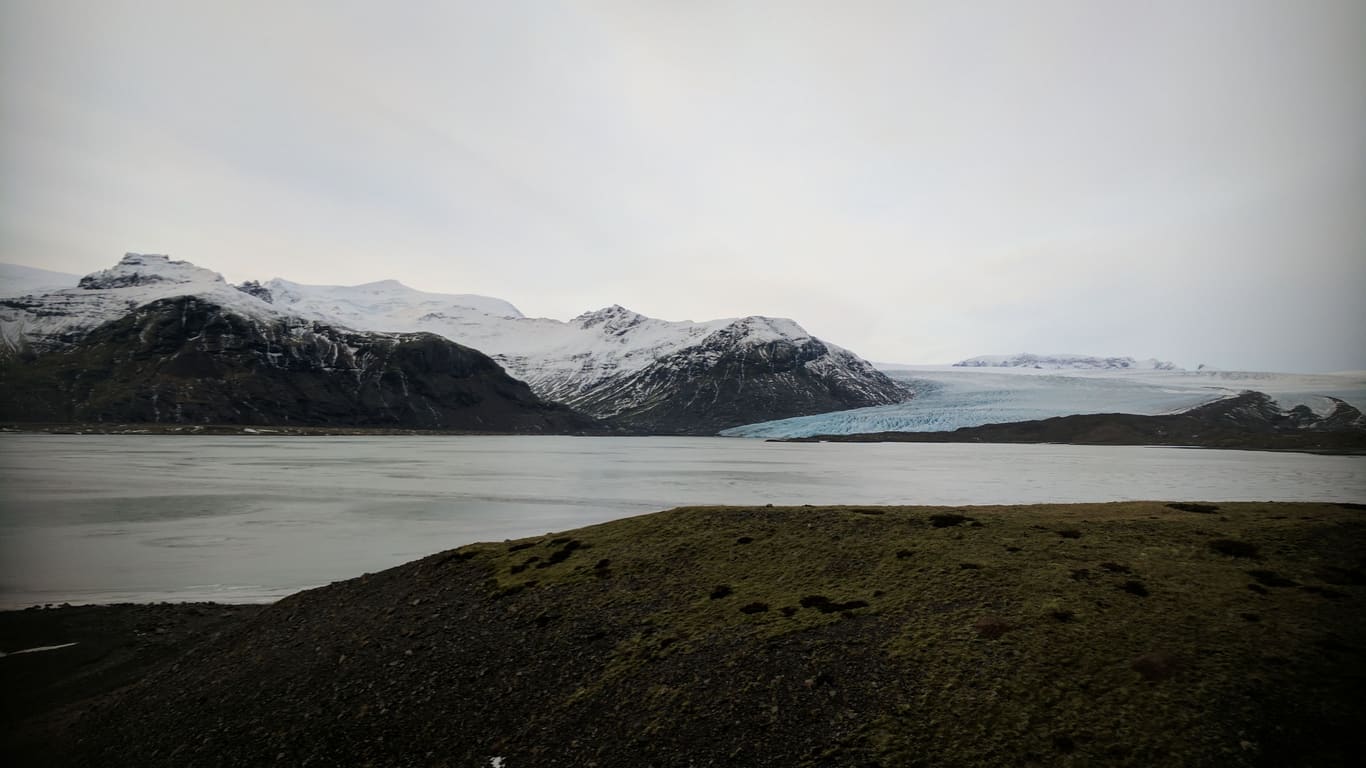
| Glacier tongues from the Ring Road | Yes | Marked viewpoints look straight at the outlets, from solid ground |
| Marked trails at Skaftafell | Yes | Vatnajökull National Park visitor area; the marked trails stay off the glacier |
| The glacier surface | No | Crevasses and meltwater channels lie hidden under the snow |
| Inside an ice cave | No | Reached over glacier tracks by Super Jeep; entrances move all winter |
Two questions usually follow that table. The first is whether a guided glacier walk works as the cheaper substitute. It doesn't, and price isn't the reason: the two partner walks we resell on our local tours page are the roughly 4-hour Breiðamerkurjökull walk with Glacier Adventure from 16,900 ISK and the roughly 4.5-hour Falljökull hike at Skaftafell with Icefall Tours from 21,900 ISK. Both are longer than our cave tour, and both run through the summer into September, the half of the year when the blue caves don't exist. In ice cave season they aren't an alternative, just a different trip.
The second is whether there's an easier cave elsewhere. Iceland has two other guided options, the Katla cave near Vík and the man-made ice tunnel in Langjökull, both closer to Reykjavík than we are. Neither is self-guided either. Is Vatnajökull the only place with ice caves in Iceland maps all three, including when I'd send someone their way.
What actually goes wrong out on the glacier?
Not the dramatic thing you're picturing. The problems that put people in trouble on Vatnajökull are quiet ones, and they share a feature: everything looks fine from where you're standing.
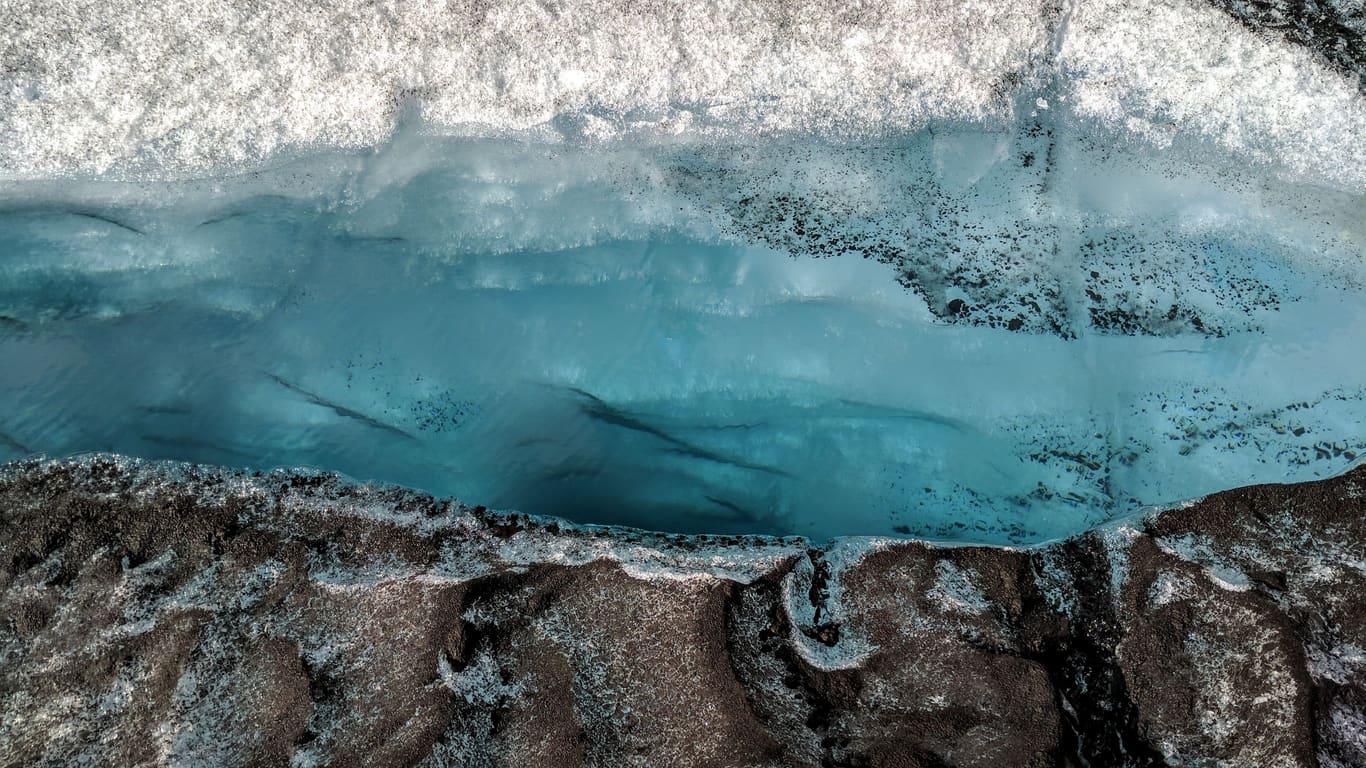
- What's under the snow is invisible. Crevasses and old meltwater channels cut through the glacier, and a winter's snow lies flat over the top of them. A snow bridge looks like ground right up until it doesn't.
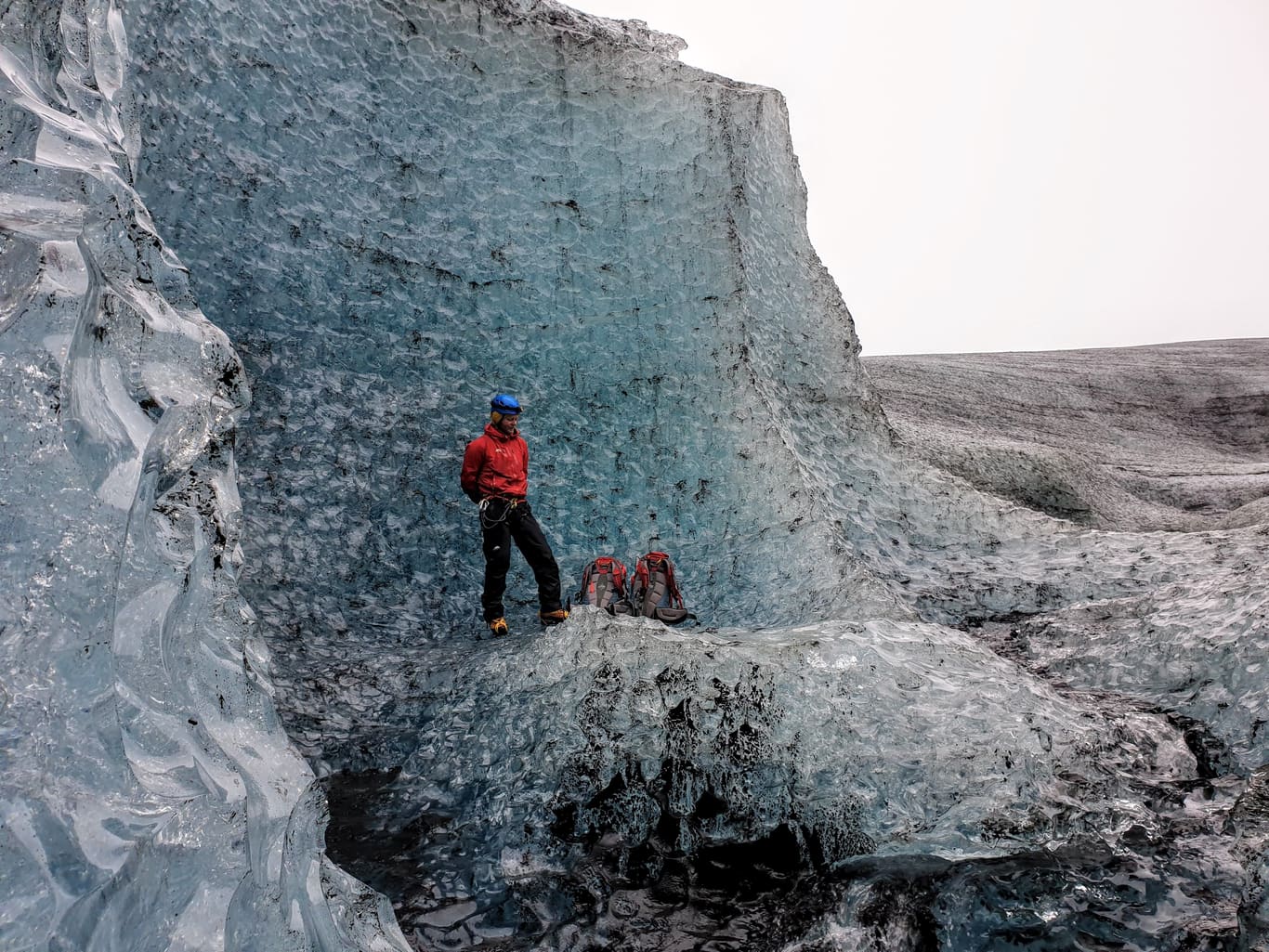
- A cave changes faster than a photograph does. Warm days and rain rework ceilings and floors, so the cave in the picture that made you want to come can be the one we walk past today.
- Cold works slowly. Inside the cave it sits around 0°C; on the surface it's usually within a few degrees of freezing, sometimes −10°C or below, and wind makes it feel far colder. In the wrong clothes you're in trouble before you feel like you are.
- You can't count on your phone. Mobile coverage on Vatnajökull is patchy, and patchiest where you'd most want it.

One claim about this gets repeated online and isn't true. Iceland does not bill you for your own rescue. Search and rescue here is Slysavarnafélagið Landsbjörg, ICE-SAR, a volunteer organisation, and no invoice arrives. What happens instead is that people with ordinary jobs leave them, in winter, often in the dark, and give you their day. That's what an avoidable call-out costs, and much of why nobody working out here treats going onto the ice alone as a private decision. Are ice cave tours in Iceland safe has the wider picture.
How do you actually reach an ice cave entrance?
By Super Jeep, then on foot. Our fleet is modified 4×4 Super Jeeps on 37–44 inch tyres, built for this ground: the tracks to the glacier access points are not the Ring Road, and a standard rental car has no business on them in winter. Where the vehicle stops, a walk on ice begins, which is why sturdy hiking boots with ankle support are the one item on our packing list I won't compromise on. How physical an ice cave tour is describes that walk; our location page maps the meeting point.
Which cave sits at the end of that drive isn't fixed. Entrances open, narrow and close through the winter, and the route we walked in November is often not the route in February. Knowing where a cave is isn't the same as knowing whether it's open today, which is what makes a self-guided version impossible rather than merely unwise.
What does a guide actually do?
Most of the work happens before you arrive. Cave conditions are checked every morning in season, together with the other local operators and Vatnajökull National Park, and the day's safest cave is chosen before any group goes in. That check is the part of the job nobody books a tour to watch, and it's the part that decides whether there's a tour at all. Some mornings the answer is that nobody goes in and we cancel, which is why our terms give you a full refund or a free reschedule when the call is ours. It's a real decision, not a script.
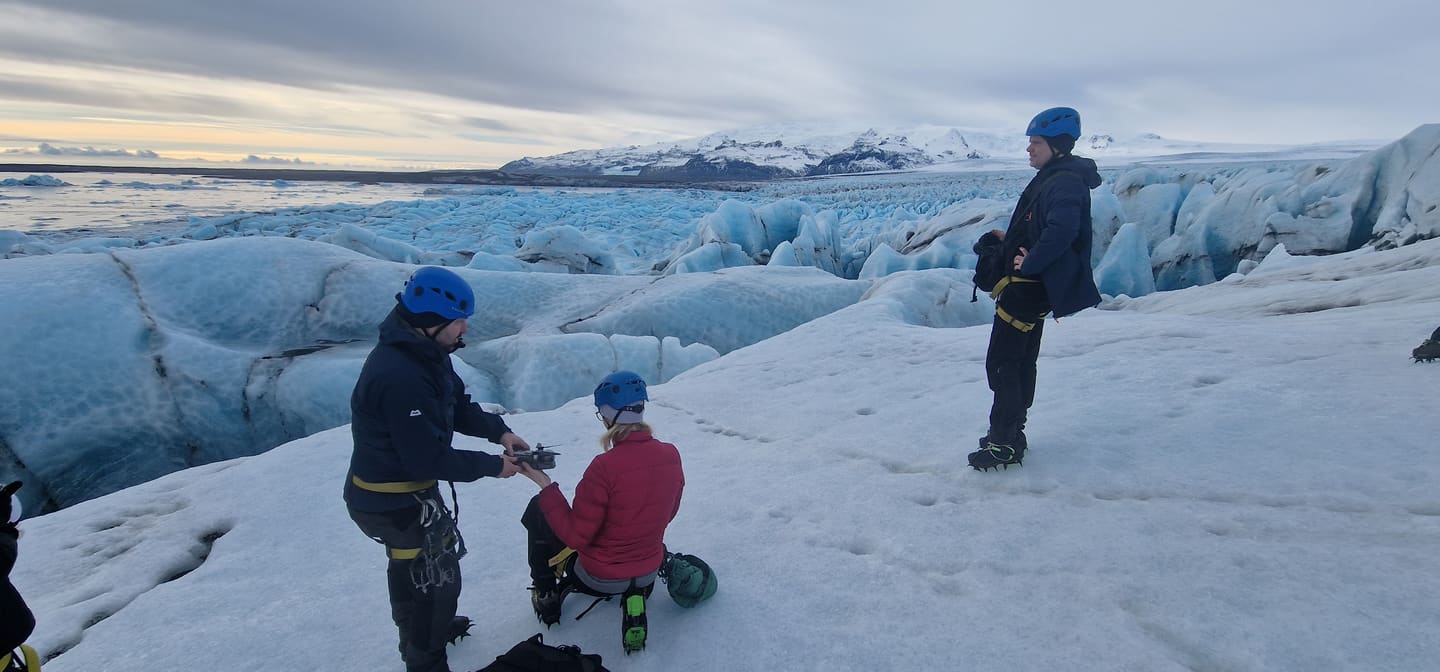
The visible half is shorter: about 15 minutes of briefing and gear fitting at the parking area, then the drive, then the walk. What gear you get depends on the tour, and it's worth being precise here. The short Ice Cave Inside Vatnajökull tour provides micro spikes when conditions call for them, a helmet, headlamps if the cave needs them, and the safety equipment the guide carries: no crampons, no harness. Crampons, a harness when the route calls for roping up, and an ice axe when needed belong to Adventures Dream, the longer tour with the glacier hike. You bring warm layers and boots either way; what to wear on an ice cave tour covers that and what's included lists the rest.
Then there's the part you only notice when it happens. Wind picks up, visibility drops, somebody's footing isn't right, and the call on whether the group keeps going belongs to the person leading it. That's one reason the groups stay small: 14 guests at most on the short tour, 8 on Adventures Dream.

What about going with a friend who's been before?
This is the most common version of the question, and the answer doesn't change. Caves shift between seasons and within one. A friend who stood in a cave last February knows what that cave was like last February; it tells them little about this December, and it may not even be the same cave, since that one may have melted out in the spring. What keeps you safe here is current information rather than remembered information, which is why the morning check happens even on a route we ran yesterday.
What if the guide fee is what's putting you off?
Two things help, and neither is a discount on safety. The base price is the same whether you book with us or through a booking platform, so booking direct costs nothing extra, gets you the code DIRECT5 for 5% off, and means you're writing to the people who run the tour if the weather turns. The other is to pick the tour that fits rather than the one that feels cheapest: the short tour at 23,900 ISK is the cave, while Adventures Dream at 36,900 ISK adds glacier surface time and a hike, not more cave. What an ice cave tour costs in Iceland breaks the number down, is an ice cave tour worth it answers the question underneath this one, and how to avoid a poor ice cave tour covers the rest.
Booking a guided ice cave tour
Both tours meet at the main parking area by Jökulsárlón Glacier Lagoon, where a parking fee applies. We don't do pickups, so nearly everyone drives.
- Ice Cave Inside Vatnajökull — 2.5–3 hours, maximum 14 guests, minimum age 8, 23,900 ISK. Includes a local guide, Super Jeep transport from Jökulsárlón to the glacier and back, micro spikes when needed, helmet, and headlamps if needed. Arrive 20 minutes before departure.
- Ice Cave Adventures Dream — 5–6 hours, maximum 8 guests, minimum age 14, 36,900 ISK. Adds a guided glacier hike, crampons, a harness when the route needs one, and an ice axe when needed. Arrive 30 minutes before departure.
The minimum ages are set by the safety plan we make for each tour, and the season runs October to April. Cancellation is free up to 48 hours before departure with a full refund; inside 48 hours there's no refund; and if we're the ones who cancel for weather or safety, you choose between a full refund and a free reschedule. Use DIRECT5 for 5% off when you book direct. Gear, dates, whether the walk suits your knees: most of it is in the tour FAQ and on our safety page; the rest goes to info@glaciertrips.is or +354 779 2919. We hold 4.9 stars across 580+ TripAdvisor reviews, much of it, I think, from telling people the truth about conditions even when it costs us the booking.
Frequently asked questions about visiting Iceland's ice caves without a guide
Can you visit ice caves in Iceland on your own?
No. The natural blue caves inside Vatnajökull are reached over glacier tracks by Super Jeep and a walk on ice, the entrances move through the winter, and every reputable Icelandic ice cave operator runs guided-only. The lagoon shore, Diamond Beach and Skaftafell's marked trails are open to anyone.
Is it illegal to enter an ice cave in Iceland without a guide?
I'm a guide, not a lawyer, so I won't rule on the law. What I can tell you is the practice: no operator here runs unguided cave visits, the entrances sit beyond Super Jeep terrain on a moving glacier, and the safe cave changes from morning to morning.
Does search and rescue charge you in Iceland?
No. ICE-SAR, Slysavarnafélagið Landsbjörg, is a volunteer organisation and does not bill the people it rescues. The cost of an avoidable call-out is paid in volunteers' time: people leaving their jobs and families to spend a winter day, often in the dark, coming to find you.
What if I'm an experienced mountaineer?
Experience helps, but it isn't the missing piece. What keeps you safe here is current, cave-specific knowledge, which entrance is stable this week and where the floor is sound, and that comes from being on the ice daily. Experienced glacier walkers we know still book guided cave tours.
Can I walk onto Vatnajökull from Jökulsárlón on my own?
Not sensibly. The lagoon shore is a walk anyone can take, but the glacier itself starts well beyond it and carries crevasses and meltwater channels hidden under snow. Getting onto the ice needs traction gear, route knowledge and someone who saw those conditions that morning.
What's the difference between an ice cave tour and a glacier walk?
A glacier walk stays on the surface; a cave tour goes inside. Both need a guide. Our short cave tour is 2.5–3 hours with micro spikes when needed; Adventures Dream, 5–6 hours, combines both and adds crampons and a harness.
— Sindri
Glacier Trips · Höfn, Iceland · A local family company since 2015