· planning · 12 min read
Vatnajökull or Katla Ice Cave? An Honest Comparison From a Vatnajökull Guide
Vatnajökull has the deep-blue winter ice caves Iceland is famous for; Katla near Vík is closer to Reykjavík, year-round, with darker ash-banded ice.
Pick Vatnajökull if you're visiting Iceland between roughly October and April and the deep-blue ice cave from the photos is the point of your trip — those caves are reached from Jökulsárlón, about 5 hours from Reykjavík. Pick Katla if you're here in summer, or based in Reykjavík with no time to travel east: it's about 2.5 hours away, open year-round, and the ice is darker, banded with volcanic ash. Written by Sindri, who runs ice cave tours on the Vatnajökull side — so read this knowing where I stand.
I'm Sindri. My wife Fanney and I run Glacier Trips, a small family company in Höfn in South-East Iceland, and we've been guiding ice cave tours from Jökulsárlón since 2015. We don't run Katla tours and have no stake in any company that does. What follows comes from a decade of working beside these glaciers, and from guests who arrive at our Super Jeep every winter fresh from the Katla cave.
The question lands in our inbox all winter: "Katla is so much closer to Reykjavík — is Vatnajökull worth the extra drive?" Here's the honest answer.
Where are the Vatnajökull and Katla ice caves?
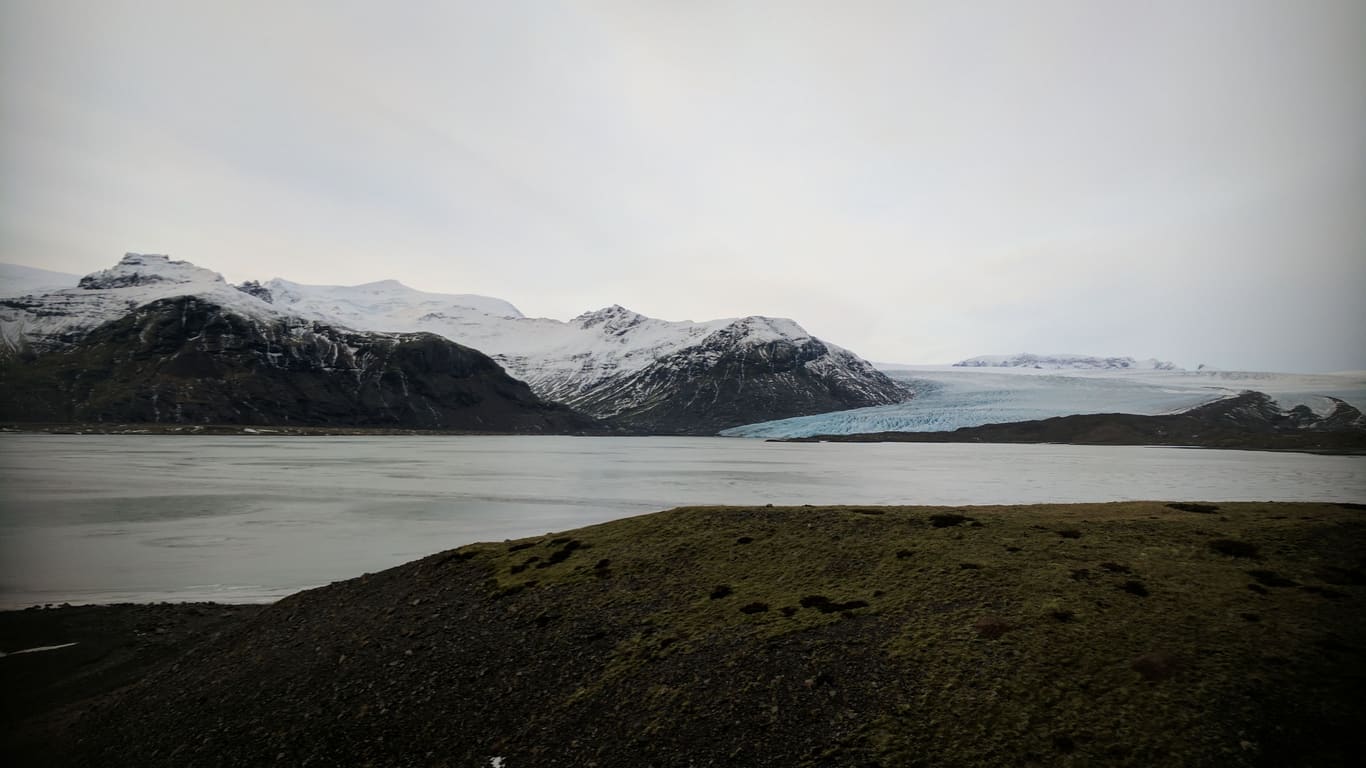
They're on two different glaciers, a few hours apart on Iceland's south coast. Vatnajökull is the big ice cap in the southeast — the largest glacier in Europe — and its blue ice caves form in outlet glaciers such as Breiðamerkurjökull, which flows down toward Jökulsárlón glacier lagoon. Tours, ours included, leave from the Jökulsárlón parking area, about 5 hours from Reykjavík.
The Katla ice cave is in Kötlujökull, an outlet of Mýrdalsjökull near Vík, with the volcano Katla underneath; that's where the name and the ash come from. Tours leave from Vík, about 2.5 hours from Reykjavík, and many offer Reykjavík pickup.
Drive time is the single biggest practical difference. Katla works as a same-day round trip from Reykjavík. Jökulsárlón genuinely doesn't; if you're coming this far east, plan at least one night in the area. Our Reykjavík to Jökulsárlón guide covers the route and where to stop.
How do Vatnajökull and Katla ice caves compare?
Here's the comparison in one table; detail below.
| Vatnajökull ice caves | Katla ice cave | |
|---|---|---|
| Ice colour | Deep, saturated blue — the classic Iceland ice cave look | Darker — black and grey ash bands through the ice, with blue patches |
| Season | Winter only, roughly October to April; conditions set the exact dates | Promoted as year-round, including summer |
| Drive from Reykjavík | About 5 hours; tours leave from Jökulsárlón | About 2.5 hours; tours leave from Vík, often with Reykjavík pickup |
| Group feel | Small groups are the norm here — we cap ours at 14 and 8 guests | Varies by operator; ask what the cap is before you book |
| Best for | Winter trips built around the blue cave, southeast itineraries, photography | Summer visits and short Reykjavík-based trips |
What do the Vatnajökull ice caves look like?
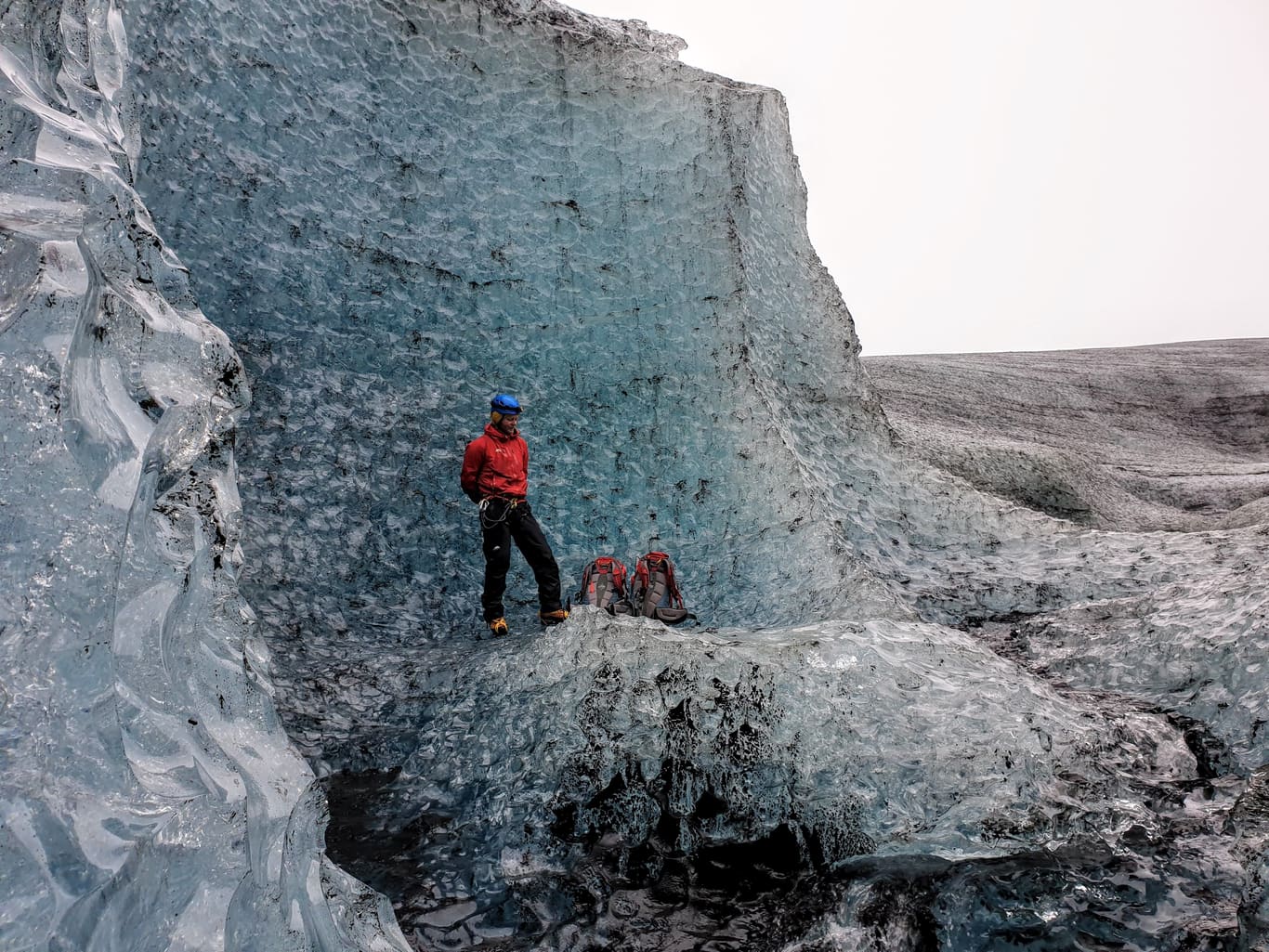
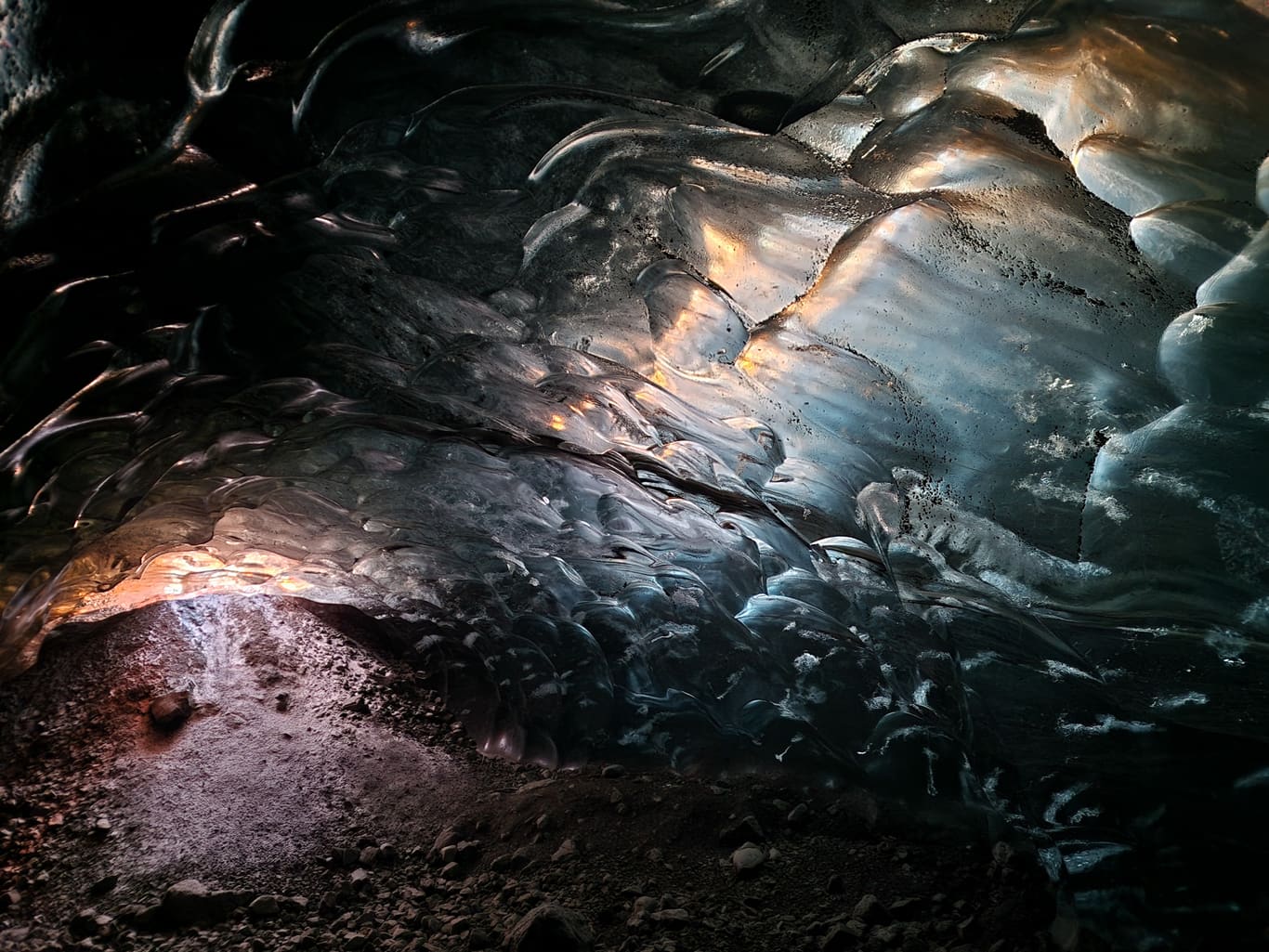
These are the caves on the postcards: natural tunnels of dense, centuries-old glacier ice in a blue that looks lit from inside. The blue is real: old, compressed ice absorbs the red end of the light and hands back the rest. Some caves are enclosed rooms of blue ice, some have skylight openings in the roof, and no two winters give the same cave — each melts in summer, and something new forms.
That yearly reset sets the season: the caves exist from roughly October to April and not otherwise. Meltwater carves them through the warm months, and once the autumn cold firms the glacier up, we go out and find what the summer left behind. Cave conditions are checked every morning in season — together with the other local operators and Vatnajökull National Park — and the day's safest cave is chosen before any group goes in. On our short tour the Super Jeep drives you from Jökulsárlón onto the glacier, and the whole visit takes 2.5–3 hours.
For the fuller picture of how these caves form and change, our guide to ice caves in Iceland goes deeper.
What does the Katla ice cave look like?
Katla's cave is darker. Kötlujökull sits on top of Katla, an active volcano, and the glacier carries ash from centuries of eruptions, so the ice is striped black, grey and white, with blue showing through in patches. More charcoal and silver than sapphire. Some travellers love that look and choose it deliberately; others arrive expecting the Instagram blue and are surprised. Check the operator's recent photos and you'll know which camp you're in.
The most-visited Katla cave sits at the glacier edge with Super Jeep access from Vík, which is what makes year-round access workable. Parts are natural cave, and operators stabilise sections so access survives the summer melt — the trade that makes an ice cave possible in July. Worth knowing what you're buying, and still a real glacier experience.
Why is Katla ice dark and Vatnajökull ice blue?
Volcanic ash, mostly. Katla erupts through Mýrdalsjökull, and every eruption lays down a dark layer that the moving ice folds into itself, which produces the striped cave walls — sometimes in patterns so regular they look drawn. The outlet glaciers where our caves form don't carry heavy ash bands like that, so the blue reads uniform and deep.

So which ice cave should you pick?
For most travellers the calendar decides it before taste does.
When is Katla the right choice?
- You're in Iceland in summer — the Vatnajökull blue caves don't exist then, and no operator can show you one.
- You're based in Reykjavík and can't add nights in the southeast.
- The ash-striped look appeals to you.
- You want to be back at your Reykjavík hotel the same evening.
I mean that list without a wink: when summer travellers email us about ice caves, Katla is usually the answer we give.
When is Vatnajökull the right choice?
- You're travelling between October and April and the deep-blue cave is what you came for.
- You can give the southeast two or three nights — Jökulsárlón, the Diamond Beach and Skaftafell fill them easily.
- You want a small group. We cap the short tour at 14 guests and the longer one at 8.
- Photography matters to you: blue ice, and winter light that stays low and soft for hours.
Whichever side you land on, vet the company the same way — our guide to choosing an ice cave tour company lists eight criteria that apply to anyone, us included.
Should you do both?
With a week or more in winter, plenty of people do: Katla early, from the Reykjavík end, then east along the coast to Jökulsárlón. The two are different enough that the second never feels like a repeat, and guests who've done both tell us the contrast made each one better. One is a volcano's glacier; the other is the blue postcard.
What do the tours cost?
Our short Ice Cave Inside Vatnajökull tour is 23,900 ISK: 2.5–3 hours from Jökulsárlón, maximum 14 guests. The longer Ice Cave Adventures Dream, which adds a proper glacier hike, is 36,900 ISK (5–6 hours, maximum 8). Katla day tours from Vík are typically priced in the same general range, so the ticket price rarely decides it.
Logistics decide it. Katla is one day out of Reykjavík with no hotel change; Vatnajökull means a night or two in the southeast, which adds accommodation but also gives you Jökulsárlón and the coast around it. The full numbers — what's included, what costs extra — are in our ice cave tour cost guide, and if you're still weighing whether any glacier tour earns its price, we wrote an honest answer to is an ice cave tour worth it too.
Frequently asked questions about Vatnajökull vs Katla
Are the Katla ice caves real natural caves?
Yes. The Katla caves are natural features of Kötlujökull, an outlet glacier of Mýrdalsjökull. Operators stabilise sections of the most-visited cave so it stays open year-round. The Vatnajökull winter caves are left as the glacier made them — they melt each summer and re-form.
Is Vatnajökull better than Katla for ice caves?
Different, not better. Vatnajökull has the deep saturated blue that Iceland's ice cave photos are famous for, in winter only. Katla has darker, ash-banded ice and runs year-round, about 2.5 hours from Reykjavík. Your dates and your base decide it more than any ranking.
Can you visit an ice cave in Iceland in summer?
Yes — at Katla. The natural blue caves in Vatnajökull exist roughly October to April and are gone in summer, so the Katla cave near Vík is the standard summer answer. It's the recommendation we give summer travellers who email us.
Can you see both Vatnajökull and Katla caves on one trip?
In winter, yes, and it works well. Do Katla early from your Reykjavík base, then drive east along the south coast to Jökulsárlón for the Vatnajökull cave. Guests who've done both tell us the contrast made each one better.
Which is safer — Vatnajökull or Katla ice cave tours?
Both are safe with a professional operator, and neither glacier is a place to visit unguided. We know of no safety difference between the regions themselves. Whichever you pick, choose an operator that checks conditions daily and cancels for weather without an argument.
Which is cheaper — Katla or Vatnajökull ice cave tours?
The cave tours themselves usually sit in a similar price range — our short Vatnajökull tour is 23,900 ISK, and Katla day tours are typically comparable. The real cost difference is logistics: Katla is a Reykjavík day trip, while Vatnajökull needs a night or two in the southeast.
Do you ever recommend Katla over your own tours?
Yes, regularly — to summer travellers, and to anyone based in Reykjavík without time to come east. Our job is to give the right recommendation, not to talk you into a tour that doesn't fit your trip.
Ready to book the Vatnajökull side?
If Vatnajökull is your pick, here are our two tours:
- Ice Cave Inside Vatnajökull — 2.5–3 hours, max 14 guests, 23,900 ISK.
- Ice Cave Adventures Dream — 5–6 hours with a glacier hike, max 8 guests, 36,900 ISK.
Two reads before you come: what to wear on an ice cave tour (boots matter most) and the Vatnajökull ice cave tour FAQ for meeting points, timing and weather questions.
Booking direct puts your questions straight into my inbox, and the code DIRECT5 takes 5% off. Still torn between Katla and us for your dates? Email info@glaciertrips.is or call +354 779 2919 and ask — I'll tell you honestly which fits your trip, even when the answer isn't us. Straight answers are how a small family company holds 4.9 stars across 580+ TripAdvisor reviews.
— Sindri
Glacier Trips · Höfn, Iceland · A local family company since 2015