· safety · 14 min read
Is It Safe to Visit an Ice Cave in Iceland? Honest Answer From a Vatnajökull Guide
Are ice cave tours in Iceland safe? A Vatnajökull guide walks through the real risks one by one, what we do about each, and the corners some operators cut.
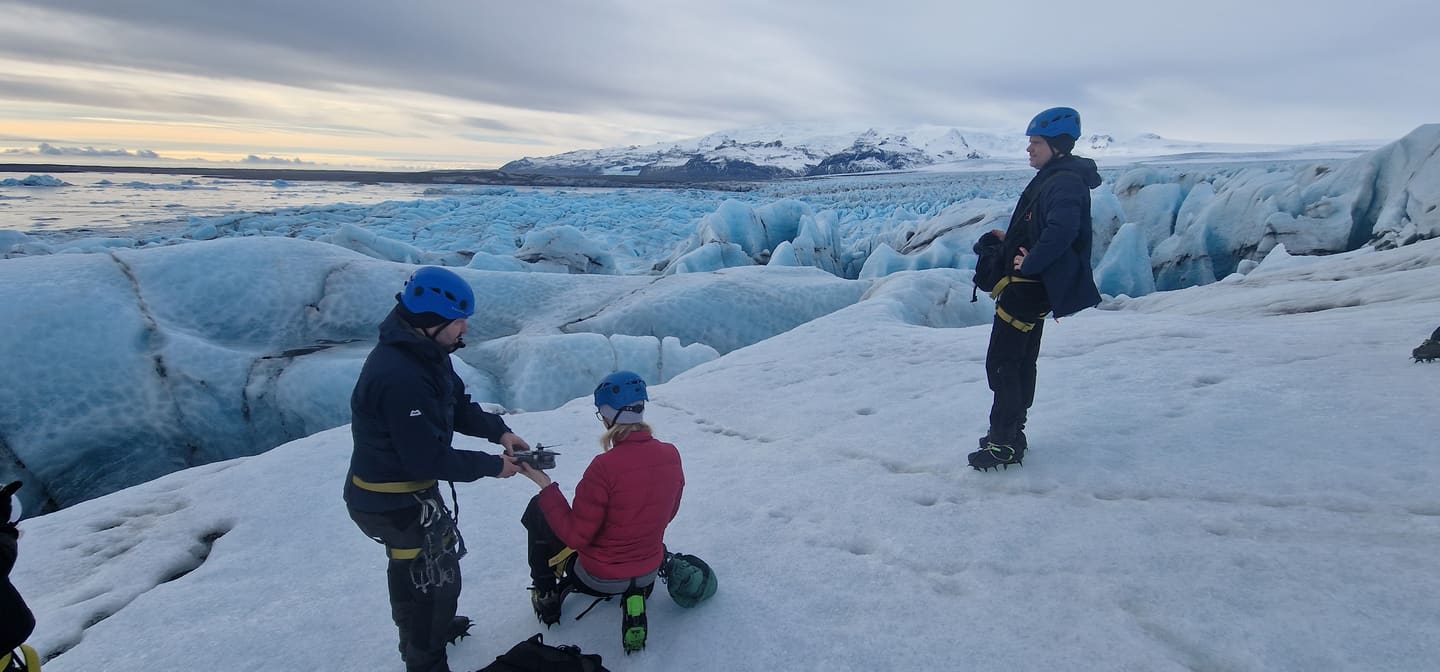
Are ice cave tours in Iceland safe? Yes, when you go with a licensed operator who scouts the cave that morning, hands you real safety gear, and keeps the group small. The serious incidents on record almost always involve people who went onto the glacier without a guide, or operators who ran tours on days they should have cancelled. With a guide and a helmet, what's left are ordinary risks: getting cold, slipping on uneven ice, weather turning. Manageable things.
But I'm not going to tell you "safe" means zero risk, because it doesn't. A glacier is a moving piece of ice the size of a small country, and not every operator treats it with the same respect. I'm Sindri; my wife Fanney and I have run Glacier Trips out of Höfn since 2015, and I still guide most winter days. One of us drives out and checks the cave every single morning before any group goes in. That habit has killed more tour days than I'd like, and I stand by every one of those cancellations.
So here's the honest version: the actual risks, one by one, what we do about each, and how to spot an operator who's cutting corners.
What are the real risks on an Iceland ice cave tour?
1. Cold
Cold is the most common problem and the most preventable one. Inside the cave it sits near freezing; out on the surface, wind makes it feel far colder. Guests in cotton, jeans and a hoodie and sneakers, start suffering within the hour. Guests in wool layers and hiking boots are comfortable the whole way.
That's why we nag about clothing at booking instead of surprising you at the meeting point. We also keep spare gloves and a thermal blanket in the Super Jeep, and if someone is genuinely cold we cut the tour short. Pushing on to "complete the program" with a shivering guest is exactly the kind of decision a good guide doesn't make.
2. Slips and falls on glacier ice
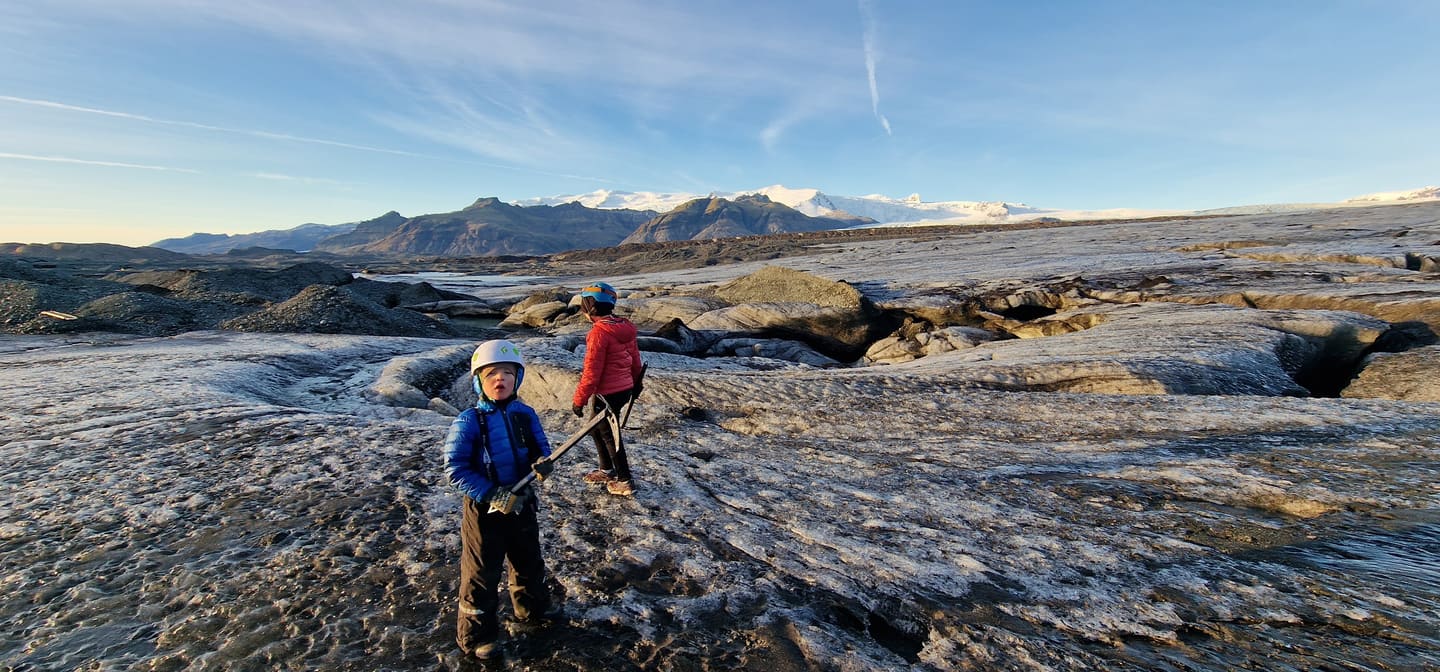
Glacier ice is uneven, and a stumble can twist an ankle even with traction underfoot. Footwear matters more than anything else you bring; sturdy boots with ankle support are the one item I won't compromise on. On the short tour we hand out micro spikes when the ice calls for them. On the longer Adventures Dream tour, which covers more open glacier, guides fit full crampons. Walking glacier ice with no traction at all is genuinely dangerous, and no operator worth your money lets guests do it.
The routine that prevents most falls is boring: fit every guest's gear before anyone walks, show people how to step in spikes (flat foot, short steps), and route around the roughest ground instead of through it because it photographs well.
3. Falling ice inside the cave
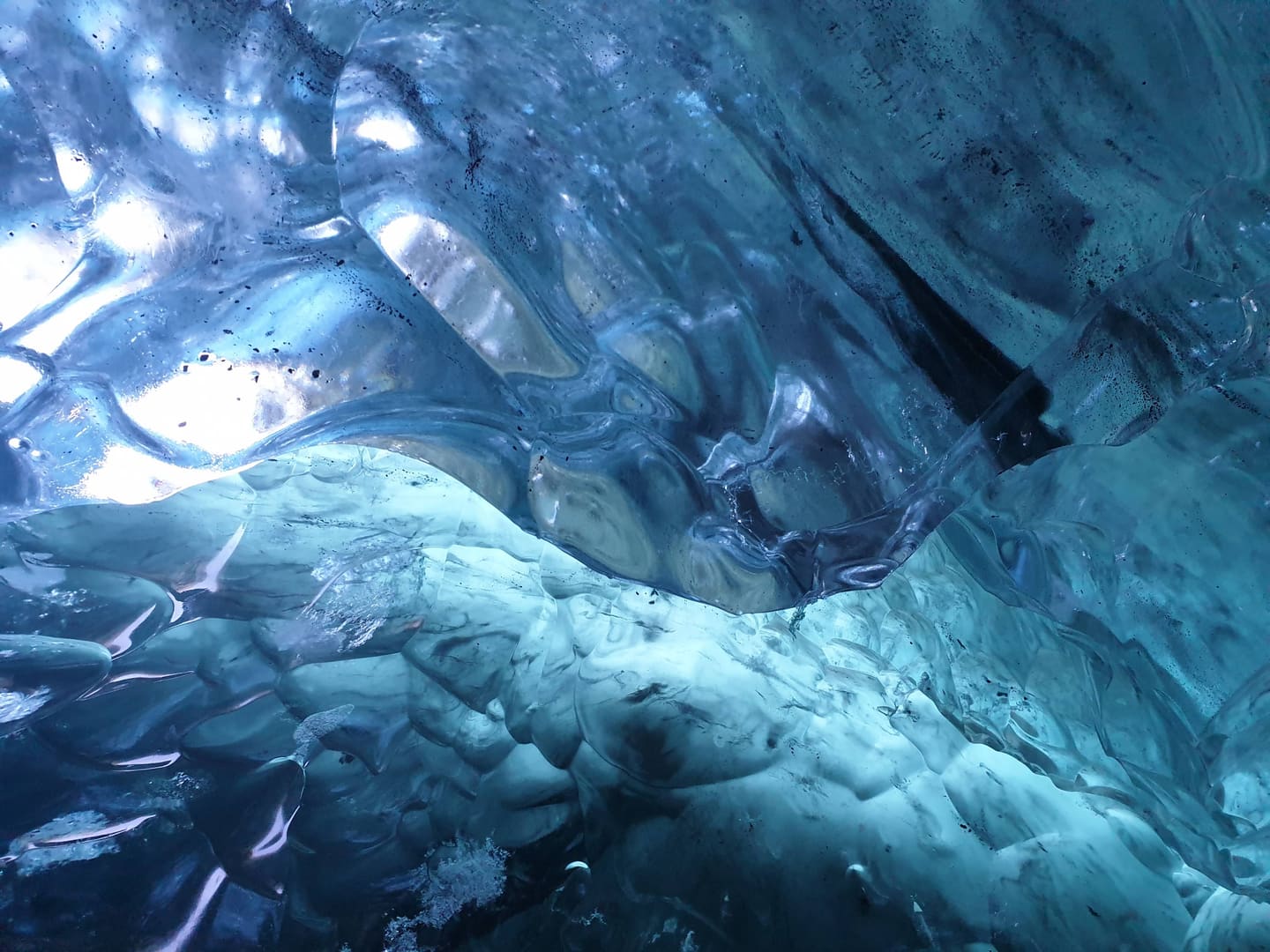
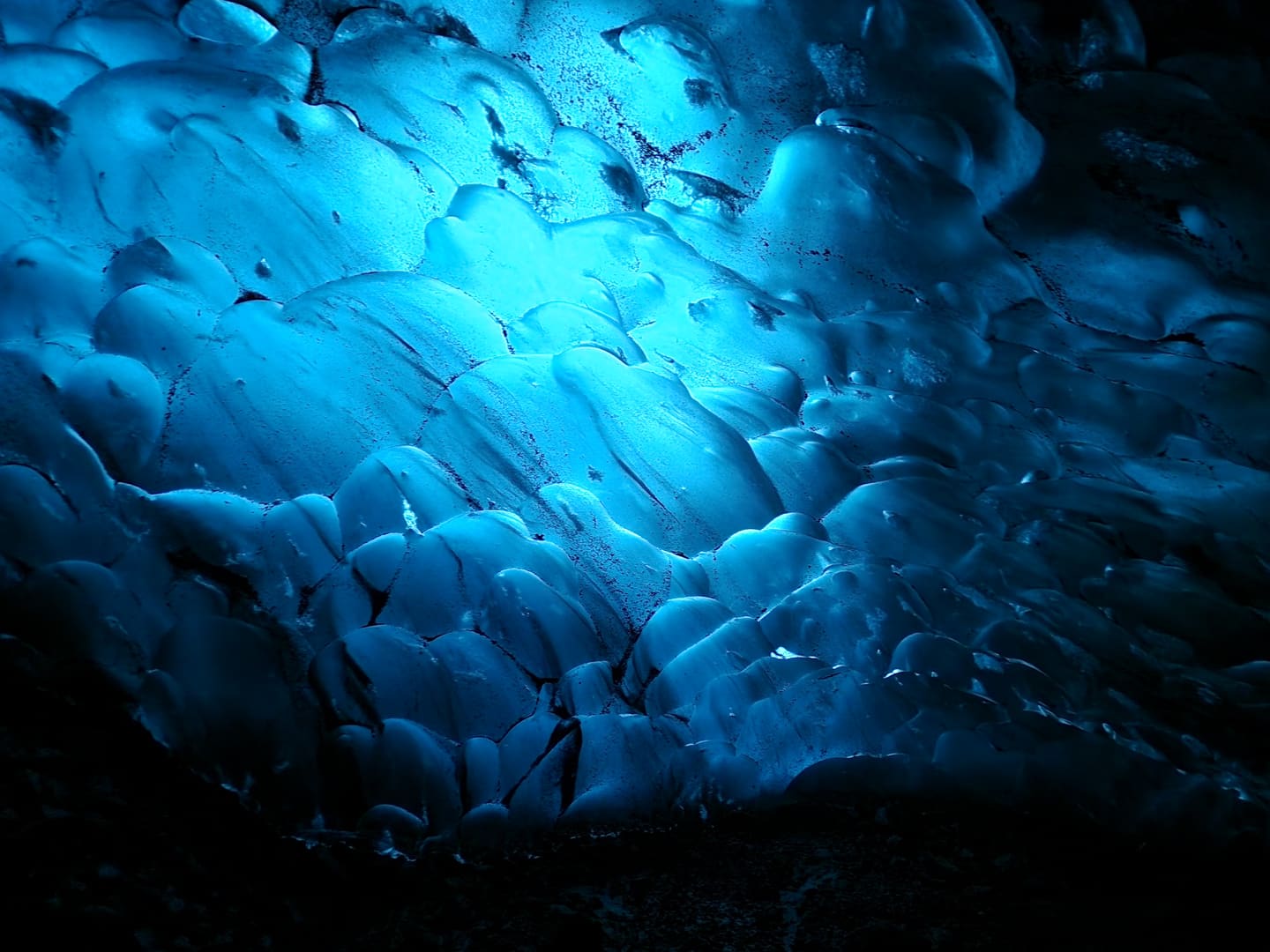
Small fragments do come off cave ceilings now and then, usually dust-sized. Major collapses of the accessible commercial caves are very uncommon. The helmet covers the everyday case. The rare case is covered by reading the cave: fresh debris on the floor, running water where there wasn't any, the sound of cracking. That morning scout is when we look for all of it, and a cave that feels wrong gets dropped for the day. We switch to a backup cave or a surface route, and I have never once regretted that call afterwards.

4. Weather and visibility
Icelandic winter weather turns fast. A clear morning can be a low-visibility storm by mid-afternoon, and a whiteout disorients everyone, guides included. Weather is the most common reason a responsible operator cancels, and it should be.
Our morning routine starts with en.vedur.is and road.is before anything else. On the ice we carry GPS and radios, we keep the schedule loose enough to turn back early, and when the day doesn't add up, we cancel it outright rather than gamble on a window.
5. The Super Jeep ride
Super Jeeps are heavily modified 4×4s built for glacier terrain — they tilt, rock, and crawl over ground a normal vehicle couldn't. To a first-time passenger the motion can feel alarming, but it's how the vehicle is meant to behave, and it's exactly why we stay conservative about routes and pace on marginal days.
What keeps the ride safe is unglamorous: maintained vehicles, experienced drivers, conservative route choices when the ground is questionable, and a briefing before departure so the rocking isn't a surprise.
6. Crevasses and surface hazards
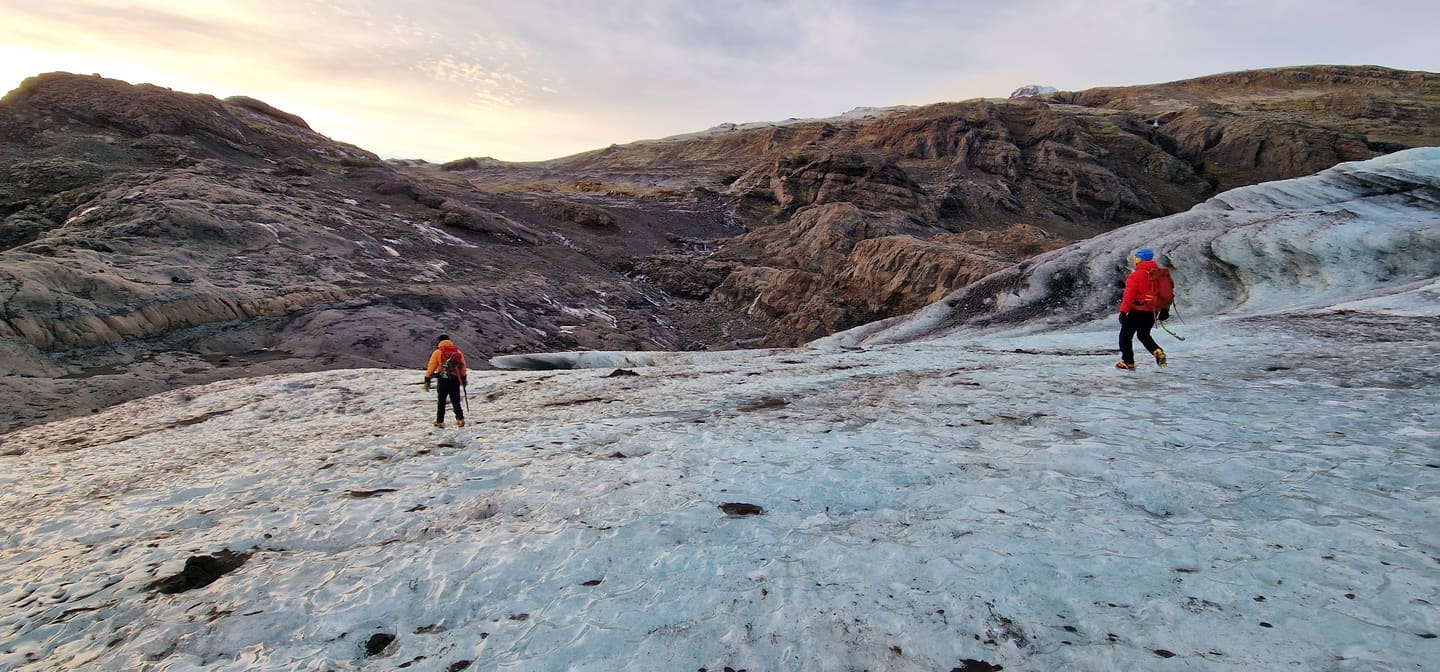
Vatnajökull has crevasses across much of its surface. The protection here is route knowledge, plain and simple. We keep strictly to scouted lines that avoid the significant crevasse zones, rope up with harnesses where the terrain genuinely calls for it (that's an Adventures Dream scenario, not the short tour), and no cave is worth crossing unprotected crevasse ground to reach. Knowing precisely where the small ones sit near a route is the thing a local guide actually brings to the day.
What gear keeps you safe
Your part of the list is short and cheap: sturdy hiking boots with ankle support, a wool or synthetic base layer (skip cotton), a fleece, a waterproof shell, a hat that covers the ears, insulated gloves, warm socks.
Our part depends on the tour. On the short Ice Cave Inside Vatnajökull tour you get micro spikes when the ice needs them, a helmet, and a headlamp if the cave is dark, plus the group safety equipment your guide carries. On Adventures Dream, which spends real time on open glacier, that becomes full crampons, helmet, and a harness when the route requires roping up. So if you're booked on the short tour: micro spikes and a helmet, not crampons and a harness. People mix this up constantly, including some operators' own marketing. The full clothing rundown is in our what to wear guide.
How to tell a safety-serious operator from a sloppy one
Every operator's website says safety comes first. Here's what actually separates them.
Look at the booking confirmation: does it spell out required gear, with reasons, before you've paid? Look at the cancellation policy: an operator who refunds weather cancellations in full has nothing pushing them to run a tour that shouldn't go. An operator who loses money on every cancellation has a quiet incentive problem.
Look at group sizes. Ours cap at 14 on the short tour and 8 on Adventures Dream, and the reason is simply eyes: one guide can genuinely watch 14 people, and can't watch 30. Look at whether gear fitting happens at the start, every time, for everyone; an operator who skips it is showing you a corner being cut in plain view. And read the negative reviews, not the star average. A pattern of safety complaints means more than a hundred five-star mornings.
One counterintuitive signal: an operator who visibly cancels for weather now and then. A perfect schedule through a stormy Icelandic winter doesn't mean they're lucky, it means tours went out on days they shouldn't have.
Questions worth asking before you book
Any good operator answers these happily: How long have your guides worked on this specific glacier? What's the guide-to-guest ratio? What weather makes you cancel? What happens if a guest is injured? Are you registered as an Icelandic day-tour operator (Ferðasala Dagsferða)? What's the refund policy on weather cancellations?
Our answers, for the record: I've guided on Vatnajökull since 2015 and our local guides have years on this ice, with the cave scouted every morning. One guide to at most 14 guests on the short tour, 8 on Adventures Dream. We cancel for severe weather and road closures, checked daily on vedur.is and road.is. The guide carries first aid. We're registered at Ferðasala Dagsferða. And any tour we cancel comes with a full refund or a free reschedule, your choice.
What happens if something goes wrong on tour
The realistic scenarios, honestly handled.
A twisted ankle or a bruise: the guide assesses it, applies first aid if needed, and gets the guest back to the Super Jeep and the Jökulsárlón parking, then helps arrange care if wanted; the hospital in Höfn is about 75 km east. That guest's tour ends there. Depending on staffing that day, the rest of the group may continue with another guide.
Weather shifts mid-tour: the guide decides whether to carry on, shorten the cave time, or turn back, and decides conservatively. Oddly enough, the cave interior is often the safest spot when surface weather worsens; it shelters you completely from the wind.
A vehicle problem: drivers know the routes and carry recovery gear. In the rare case a Super Jeep won't move, another operator's vehicle shuttles guests back. We keep those mutual-aid relationships with the other Jökulsárlón operators for exactly this.
Someone falls behind: guides keep a running head count, and if a guest drifts, the whole group stops until they're back in. With 8 to 14 people, this stays simple.
Are children safe on ice cave tours?
Our short tour takes children from age 8; Adventures Dream from 14. Those minimums come from Icelandic tour-operator safety regulations, not from us. The logic is sound though: spikes and glacier walking need basic balance and the ability to follow instructions, small bodies lose heat faster, and the ground is uneven.
Families with kids 8 and up do genuinely well on the short tour; we guide them all winter. Pack extra layers for the children since hands and feet chill first, keep a parent close, and let the guide explain what's coming. Kids who know what to expect treat the whole thing as an adventure, which, to be fair, it is.
Frequently asked questions
Is it safe to go inside an ice cave in Iceland?
Yes, with a professional guide, proper gear, and an honest operator. Guides scout the cave that morning, helmets are mandatory, and serious incidents are rare. Going into a cave on your own, without a guide, is the part that isn't safe.
Have there been deaths or serious injuries on Iceland ice cave tours?
They're rare. Iceland's commercial ice cave industry has run for more than a decade, and the serious incidents on record overwhelmingly involve people who were on the glacier without a guide, or operators that cut corners. A guided tour with a professional is the low-risk way to do it.
Can ice caves collapse?
Major collapses of the accessible commercial caves are very rare. Small fragments fall occasionally, which is what the helmet is for. Guides read the cave for signs of recent movement and abandon any cave that looks unstable for the day.
What if the weather is bad on my tour day?
We check vedur.is and road.is every morning, and if conditions are unsafe we cancel: severe storm, closed roads, unsafe ice. You get a full refund or a free reschedule, your choice. Most weather cancellations come from us, not the guest.
What if I'm scared once I'm inside?
Tell the guide; it happens and it's fine. We've had guests step back to the entrance and wait while the group goes deeper. Cave entrances are usually wide and open, and the closed-in feeling people fear often never shows up in the bigger chambers. If it does, we work with you.
Does an experienced guide really make a difference?
More than anything else. The same cave is far safer with a guide who knows that day's conditions than with a rotating contractor who doesn't. It's why our team stays small and stays the same: the people guiding these tours have been on this ice for years.
Can I visit ice caves without a guided tour?
Not safely. The entrances sit beyond Super Jeep terrain plus a glacier walk that needs traction gear and route knowledge. Solo glacier travel in winter is dangerous, and an unscouted cave is a real risk. Every reputable ice cave operator in Iceland runs guided only.
What insurance do operators carry?
Licensed Icelandic operators carry liability insurance tied to their Ferðasala Dagsferða registration; the specific terms vary by operator. Carry your own travel insurance too, one that covers adventure activities. We're happy to share our coverage details by email if you ask.
Ready to book?
Ice Cave Inside Vatnajökull (2.5–3 hours, max 14, from 23,900 ISK) is the standard day. Adventures Dream (5–6 hours, max 8, from 36,500 ISK) adds the glacier hike and suits photographers.
Worried about a specific condition, or unsure whether a tour suits someone in your group? Email info@glaciertrips.is and describe it honestly. We'd rather talk it through before you book than have you on the ice unsure. Sometimes the answer is "yes, easily"; occasionally it's "give this one a miss", and you deserve to hear that too.
See you on the glacier,
Sindri
Glacier Trips · Höfn, South-East Iceland · family-run since 2015